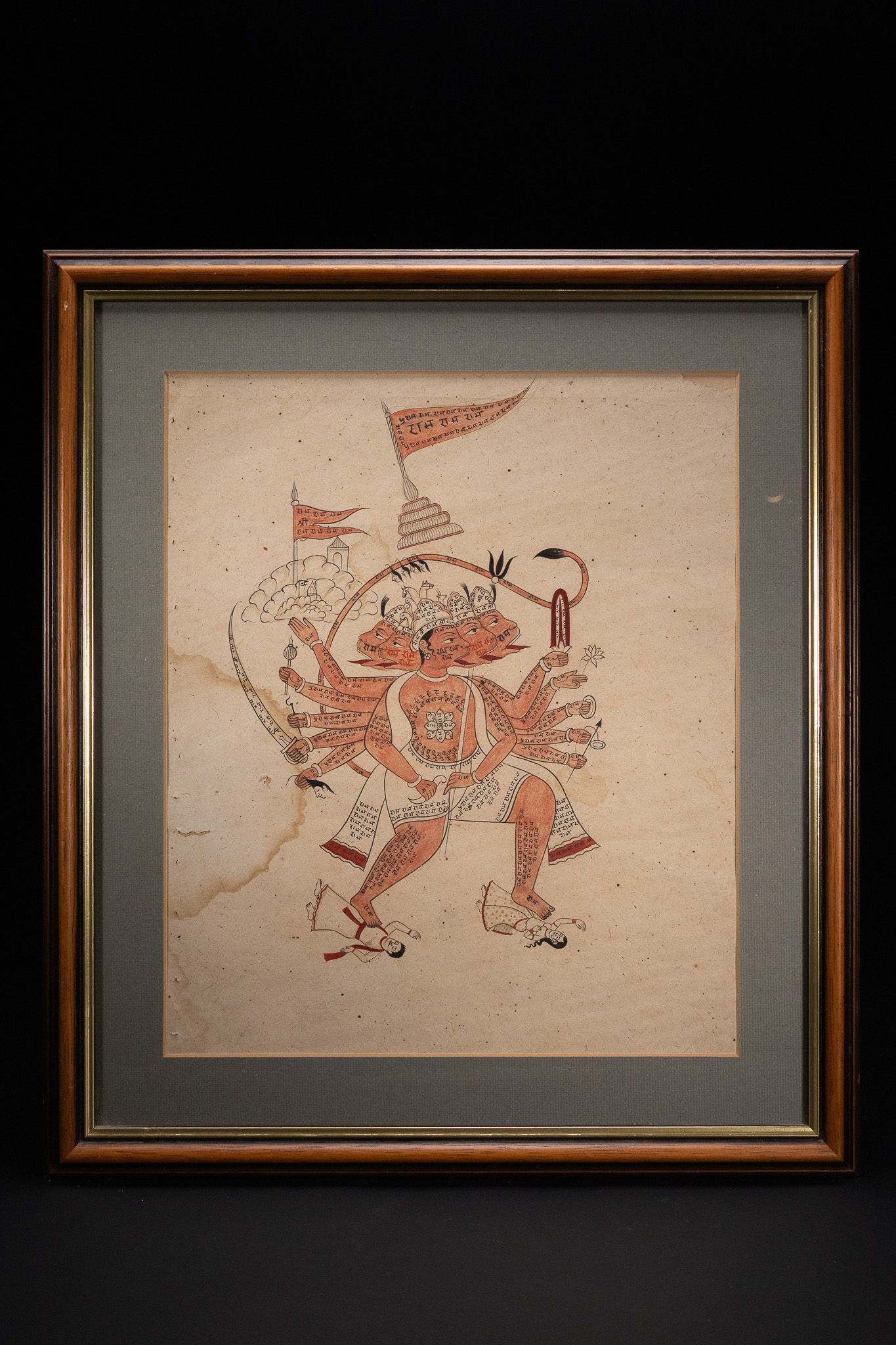
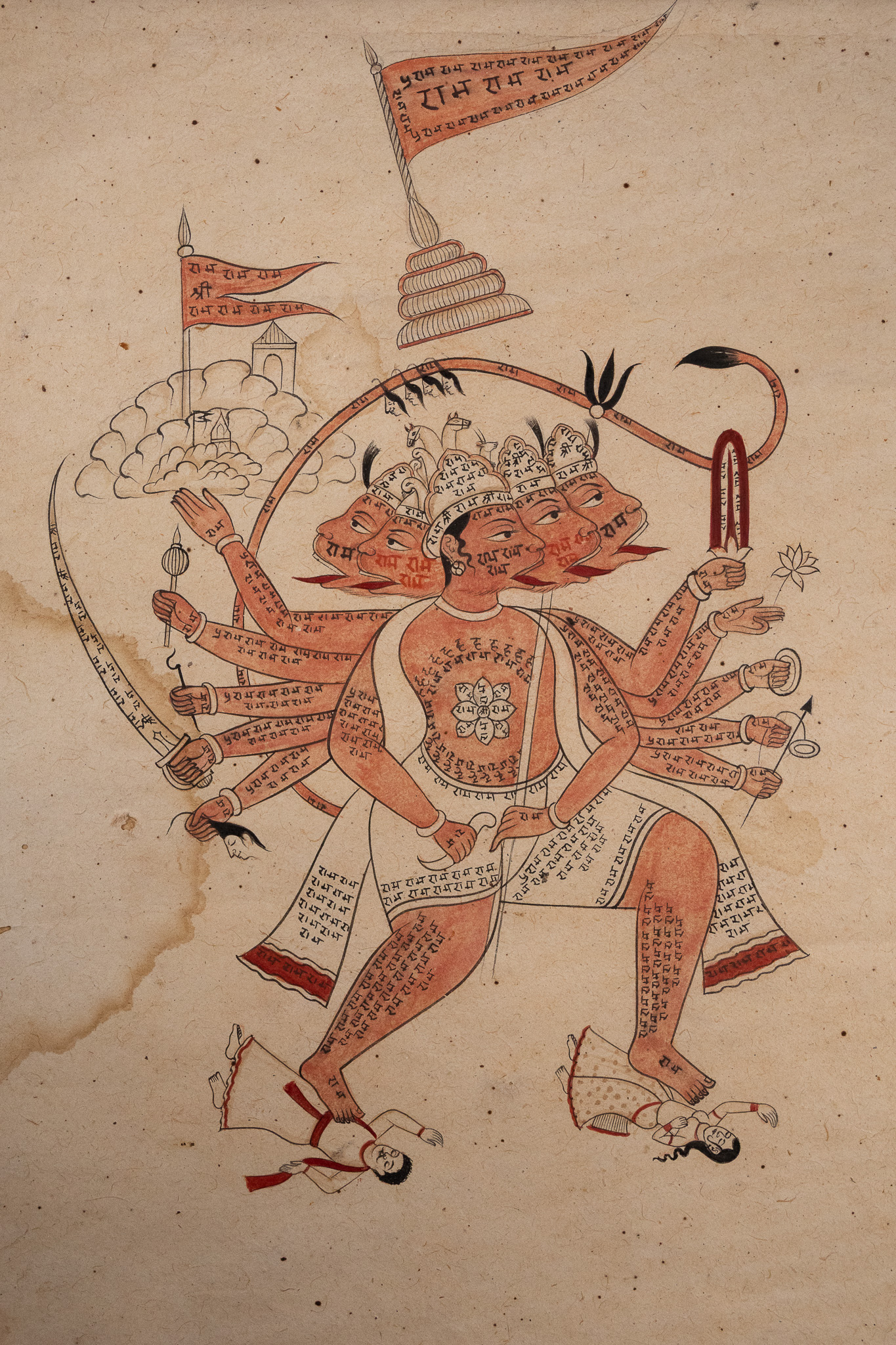
Lot 281: A NORTH INDIAN FOLK PAINTING OF PANCHAMUKHI HANUMAN WITH RAM-NAM SCRIPT, 19TH CENTURY.
0 views
This is an Indian devotional folk painting on paper, dating to the 19th century and originating from Northern India, likely the Rajasthan or Uttar Pradesh regions. The artwork depicts the Hindu deity Panchamukhi Hanuman, the five-faced and ten-armed form of the monkey god. He is shown in a dynamic striding pose, treading upon two small figures representing the vanquished demons Ahiravan and Mahiravan. Hanuman holds a variety of symbolic attributes in his ten hands, including a curved khadga sword, a mace (gada), a lotus blossom, and a bow. A central devotional feature of this painting is the dense repetition of the word Rama (राम) in Devanagari script across the deity’s body, limbs, and clothing, as well as on the flags in the background. This practice, known as Ram-nam lekhan, serves as a visual prayer and signifies Hanuman’s total devotion to Lord Rama. The background features two flags and a stylised temple or shrine. The painting is executed in a provincial bazaar style, characterised by bold outlines and flat application of pigment.
Approximately 43.3 x 38cm
Condition report:
The paper shows visible signs of age and exposure, including significant water staining and tide marks to the left-hand side, along with general foxing across the surface. There is overall discolouration and yellowing of the paper. The frame displays minor surface scuffing but is in overall good condition. The work has not been examined outside of its frame.
Share this lot: