
Lot 199: A Chiromantic Hand Diagram in Red Ink, Indic...
2 viewsNot sold
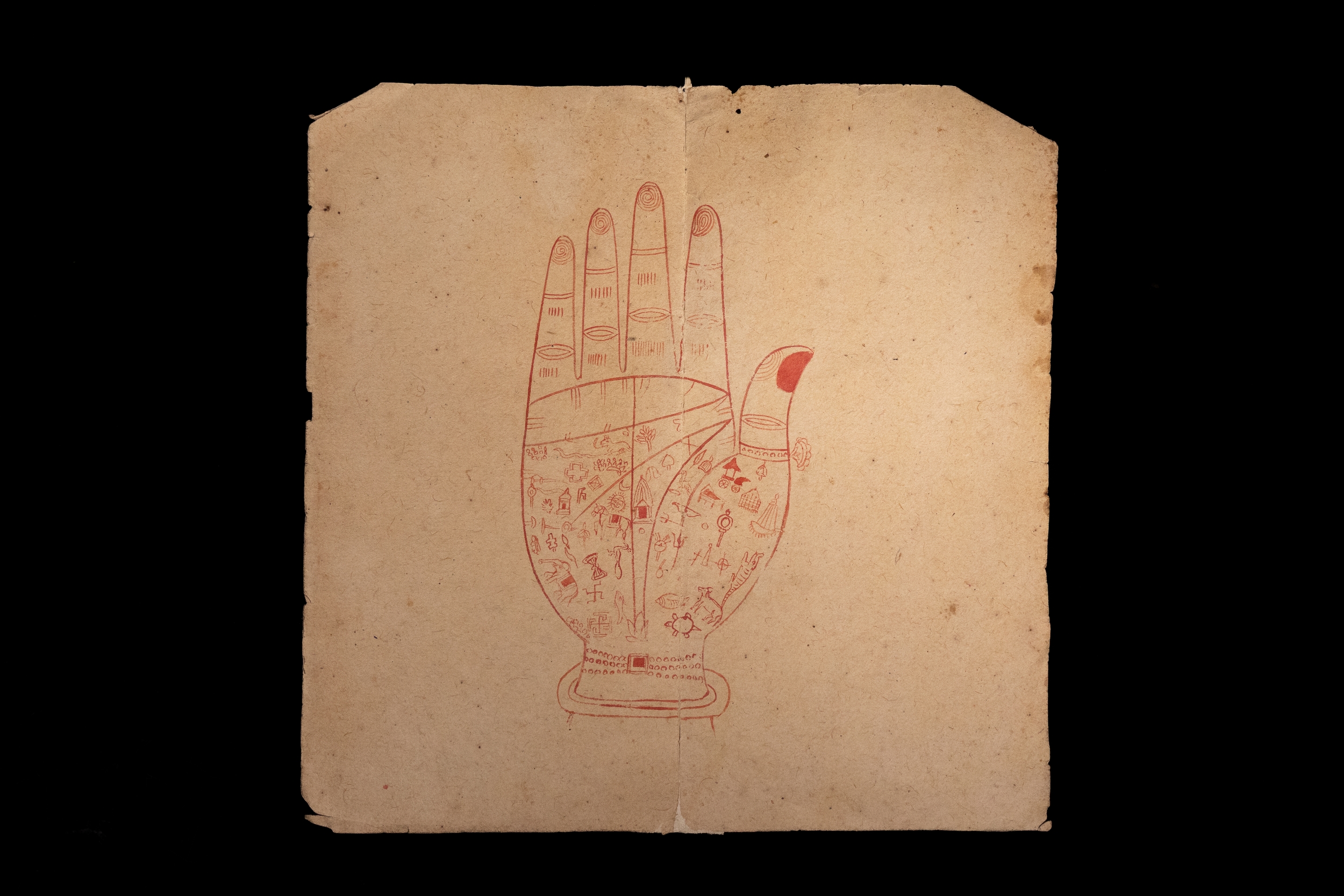
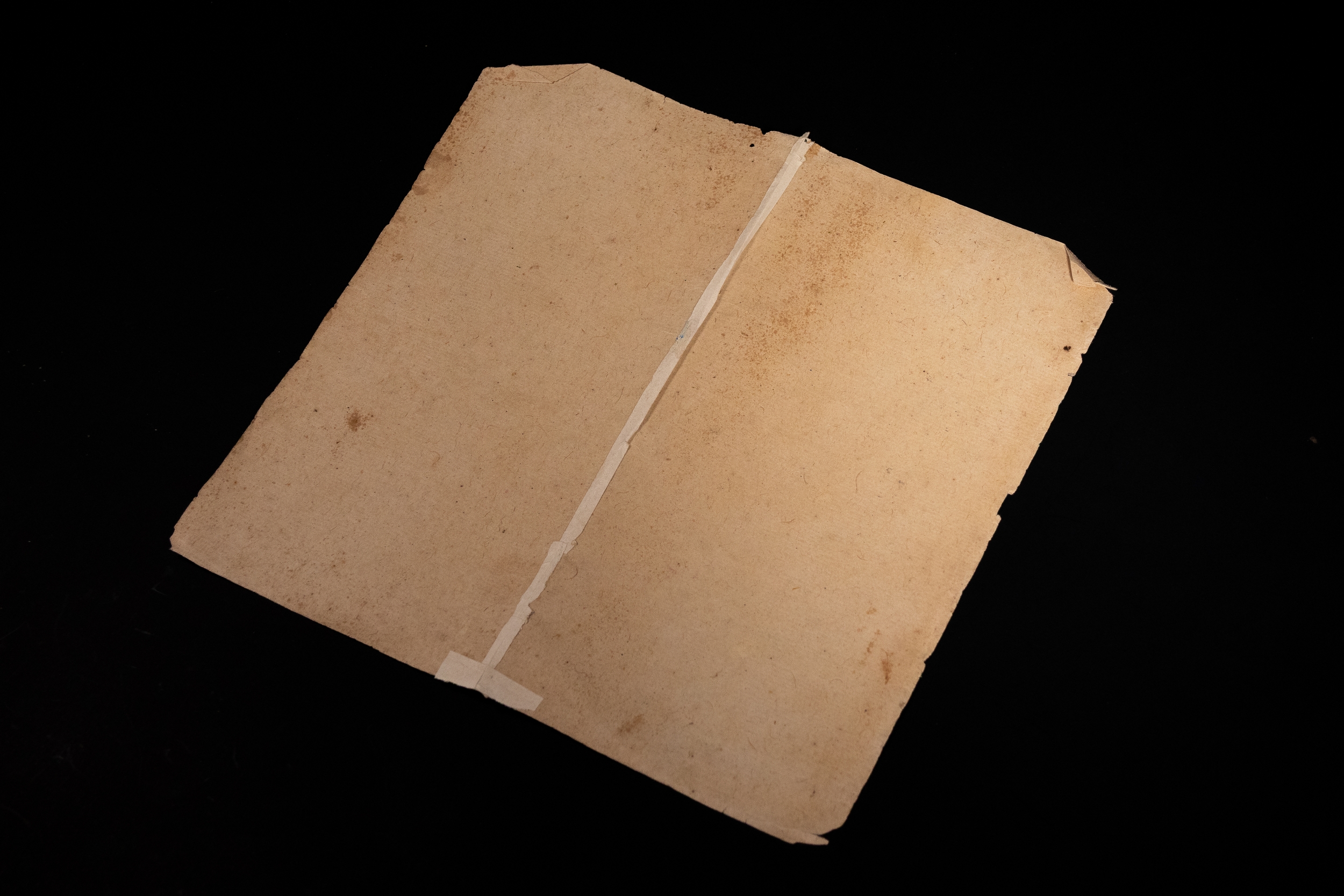
A Chiromantic Hand Diagram in Red Ink, Indic Palmistry Chart, Early Modern Period.
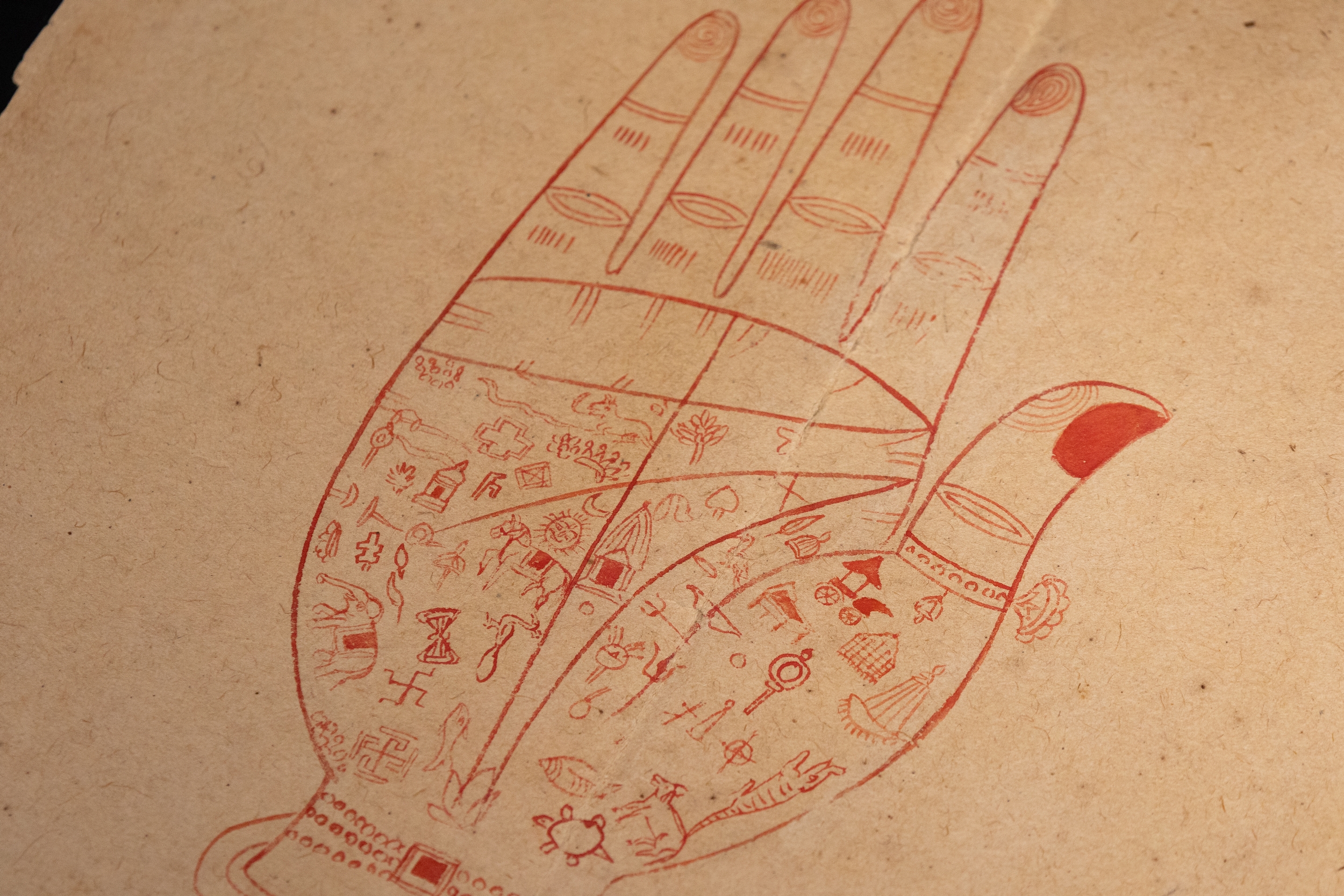
A rare and striking palmistry diagram rendered in red ink on paper, this hand illustration showcases the right palm in an upright, frontal position. Likely originating from early modern South Asia, the image synthesises traditional Indian chiromancy (hastasamudrika shastra) with elements of jyotiṣa (Vedic astrology).
The palm is meticulously inscribed with major and minor lines—life, heart, head, and fate—alongside minute symbols that reflect the classical Indic system of predictive palm reading. The mounts of planets are subtly indicated at the base of each finger, corresponding to Mercury (little finger), Apollo (ring finger), Saturn (middle), Jupiter (index) and Venus (base of thumb).
Intricate miniature motifs within the palm—such as animals, temples, lotuses, and yantras—are traditional indicators for specific life events, wealth, travel, or obstacles. These are deeply embedded in Sanskritic metaphysical traditions and would be referenced in manuals known as Hastarekha Shastra.
Approximately 26 x 26cm
Provenance: This schematic hand-chart belongs to a long tradition of chiromantic illustrations rooted in medieval and Renaissance occult sciences. Comparable examples can be found in 13th-century Hebrew and Latin manuscripts, notably a mid-13th-century Hebrew palmistry chart (British Library MS 11639), which was used to interpret character traits and future events through symbolic readings of the hand.
The iconographic tradition developed further in Renaissance Europe (14th–17th centuries), where chiromancy was often studied alongside astrology and physiognomy. Manuals such as Ludicrum Chiromanticum Praetorii (1661) included richly engraved hand diagrams layered with signs, lines, planetary symbols, and predictive notations.
During the 19th and 20th centuries, institutions such as the British Library and the Wellcome Trust began systematically acquiring occult and esoteric manuscripts. The present piece aligns stylistically with these collections—particularly with the hand illustrated in MS 11639, as catalogued and discussed by scholar Erik Kwakkel.
Share this lot: