
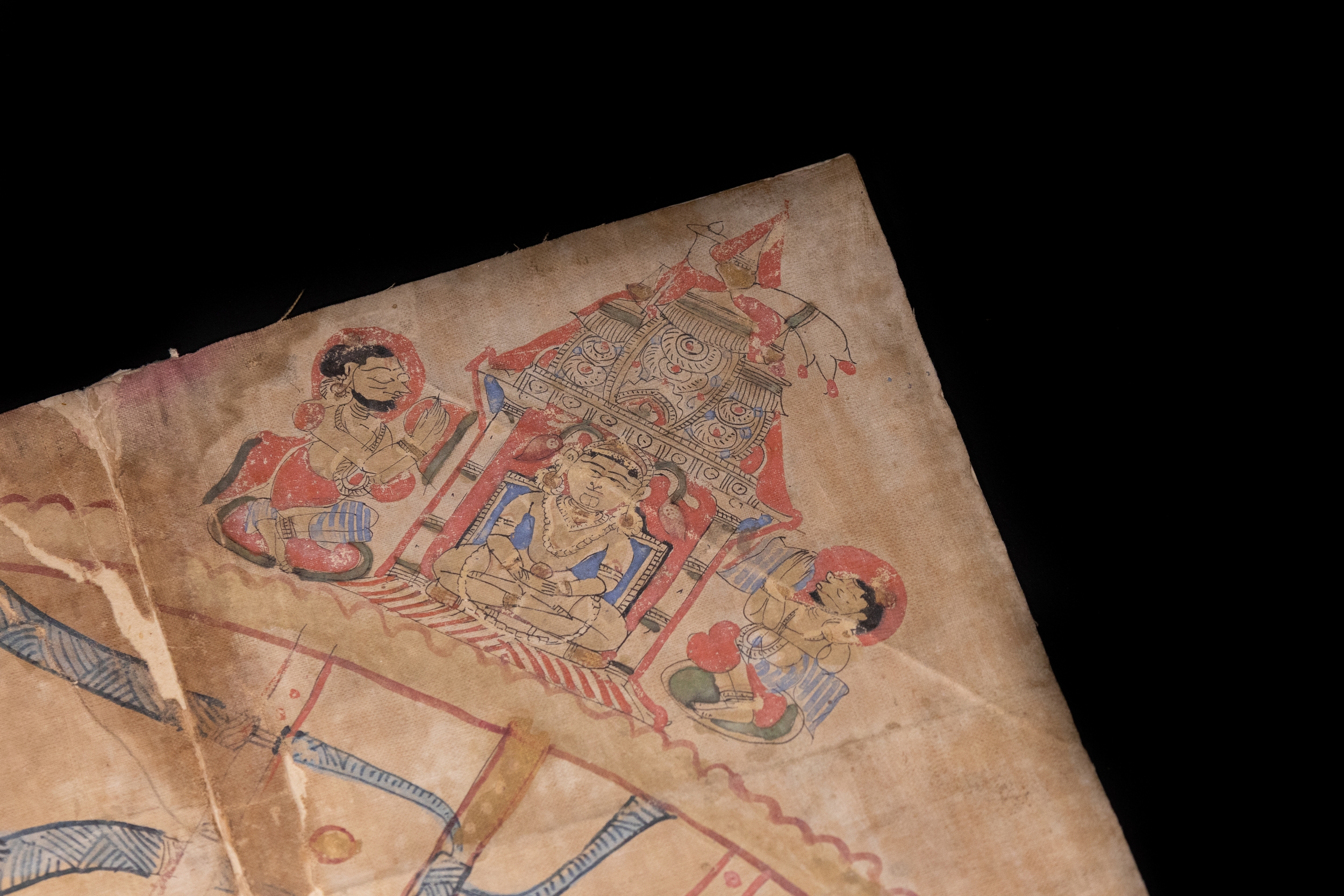
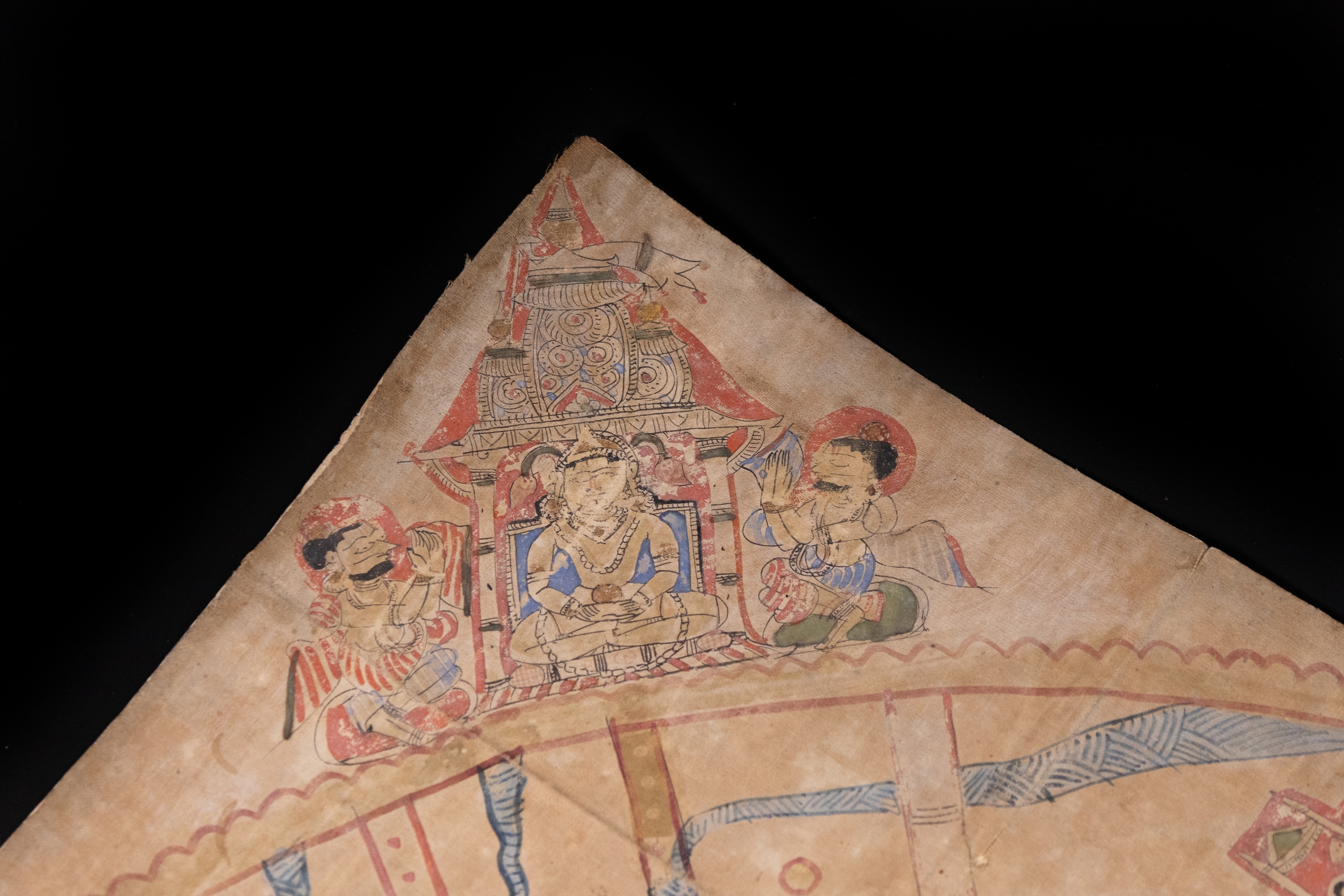
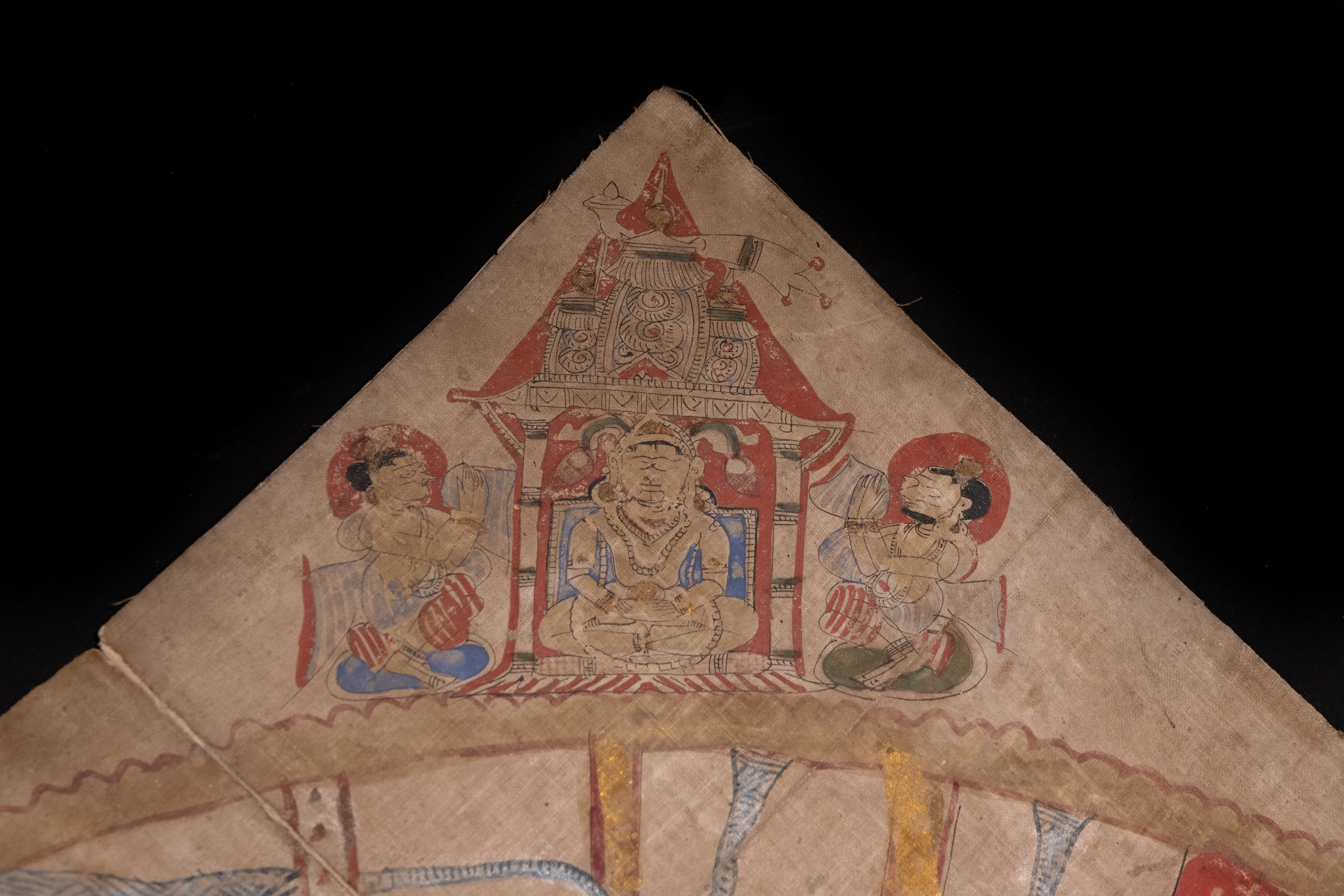
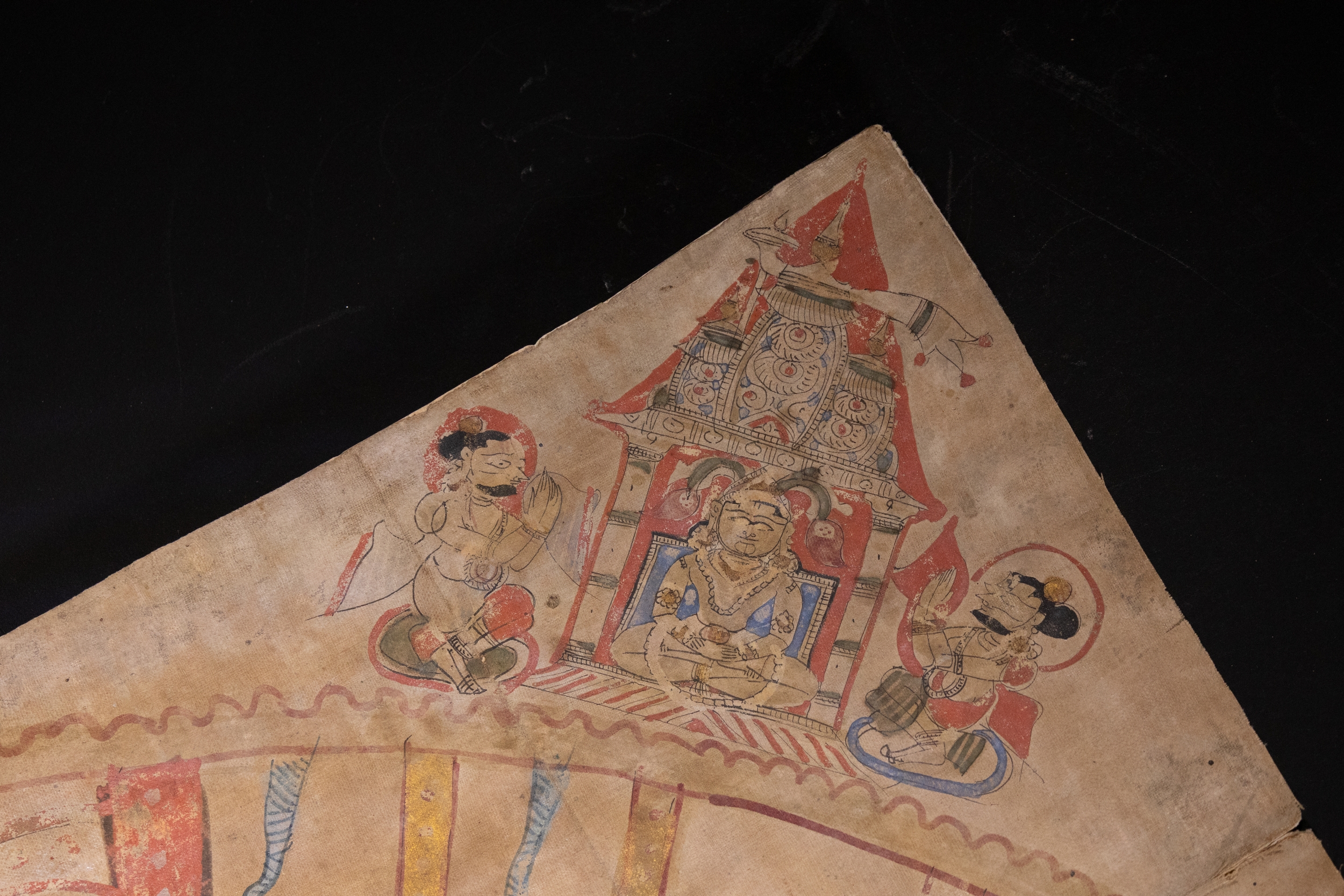
Lot 198: A Jain Cosmological Mandala of Adhaidvipa (Two and...
3 viewsNot sold
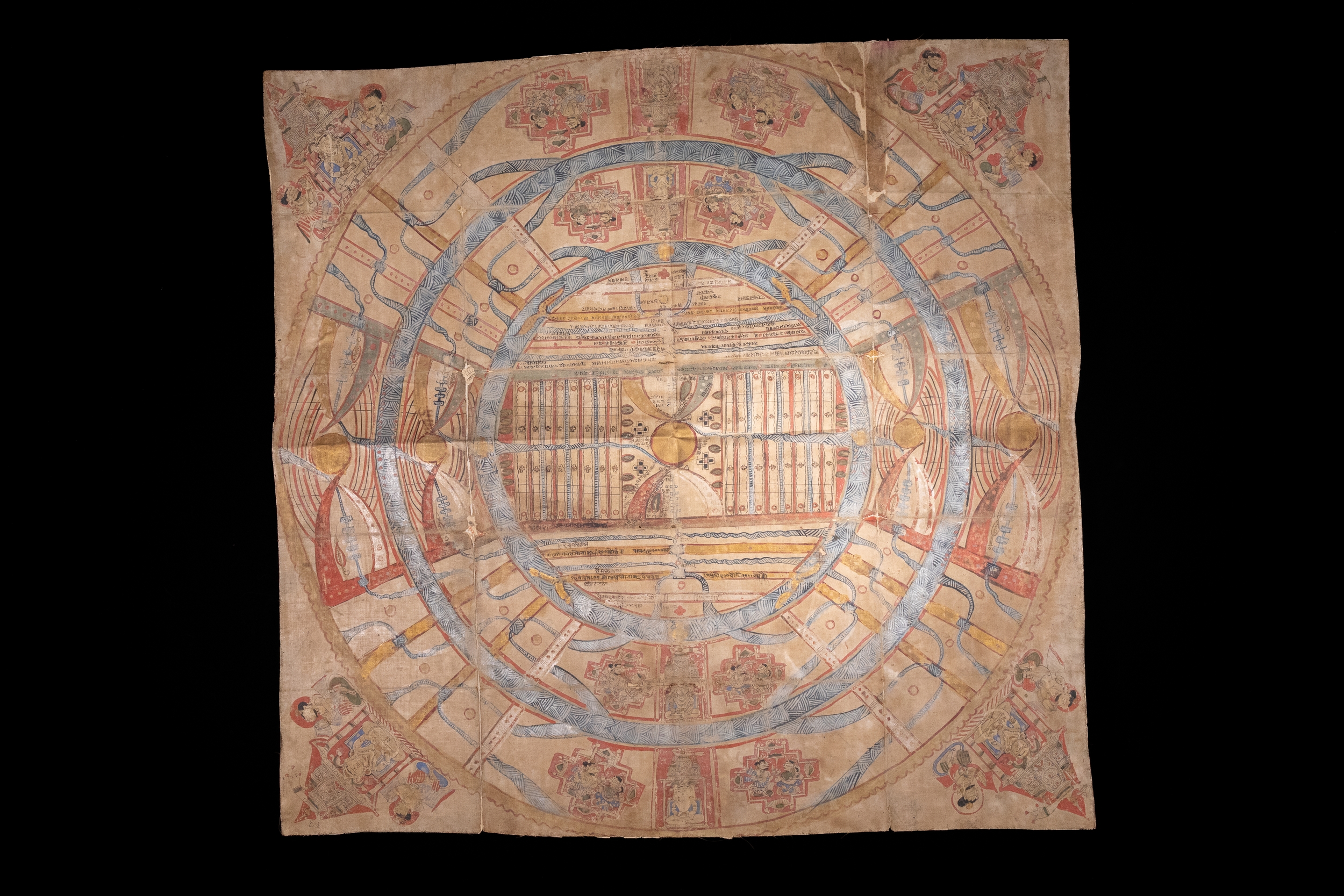
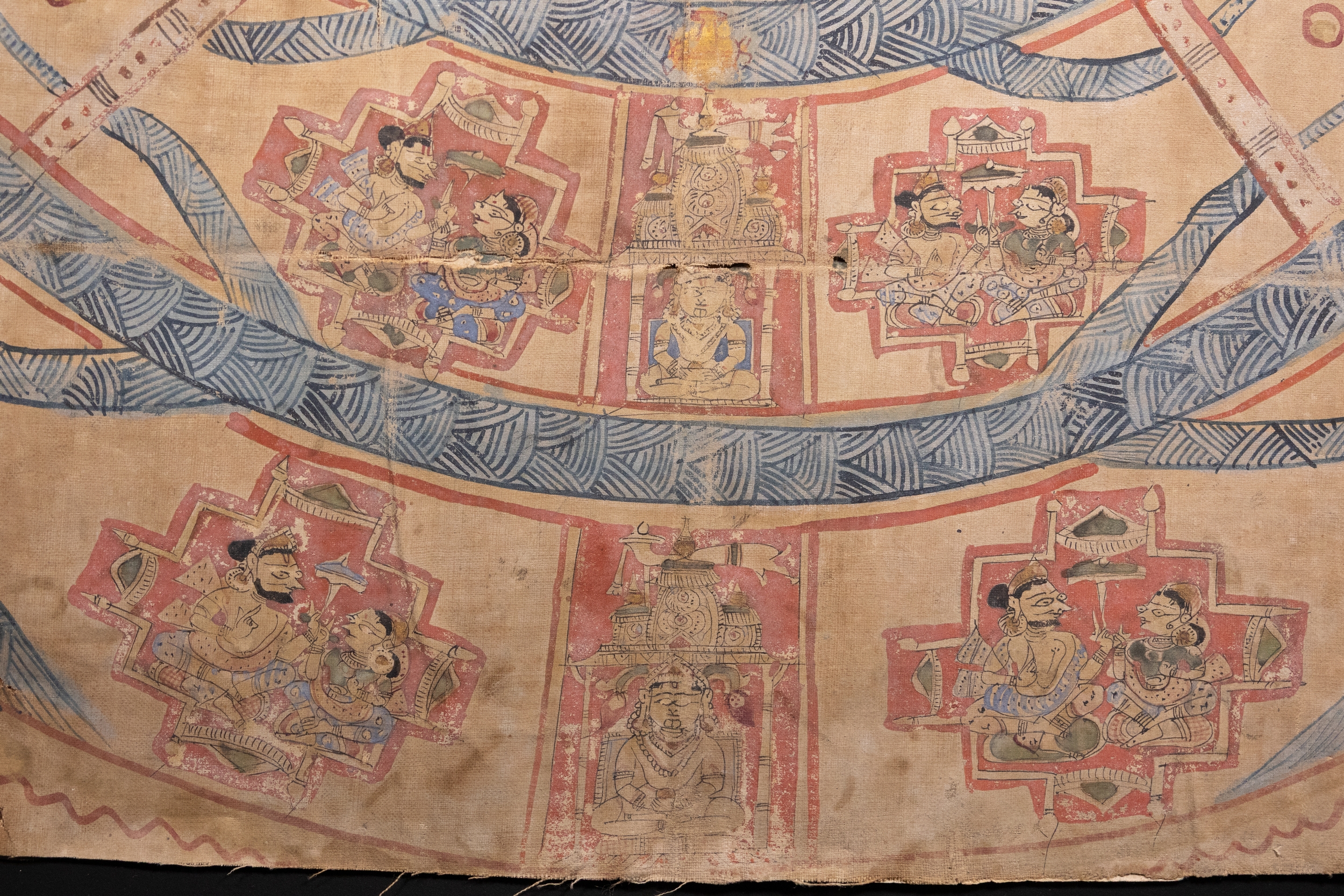
A Jain Cosmological Mandala of Adhaidvipa (Two and a Half Continents), Western India, ca. 18th Century.
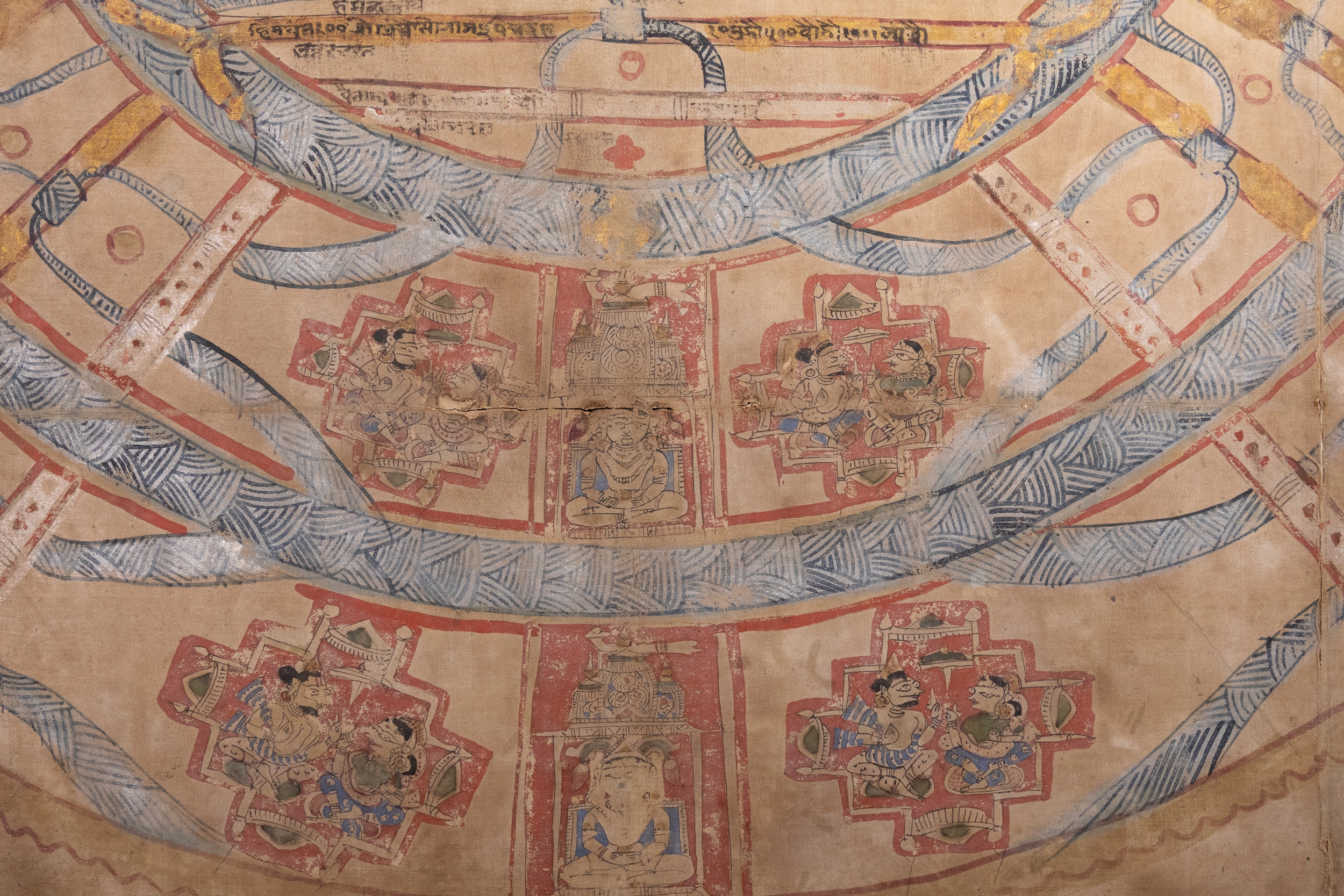
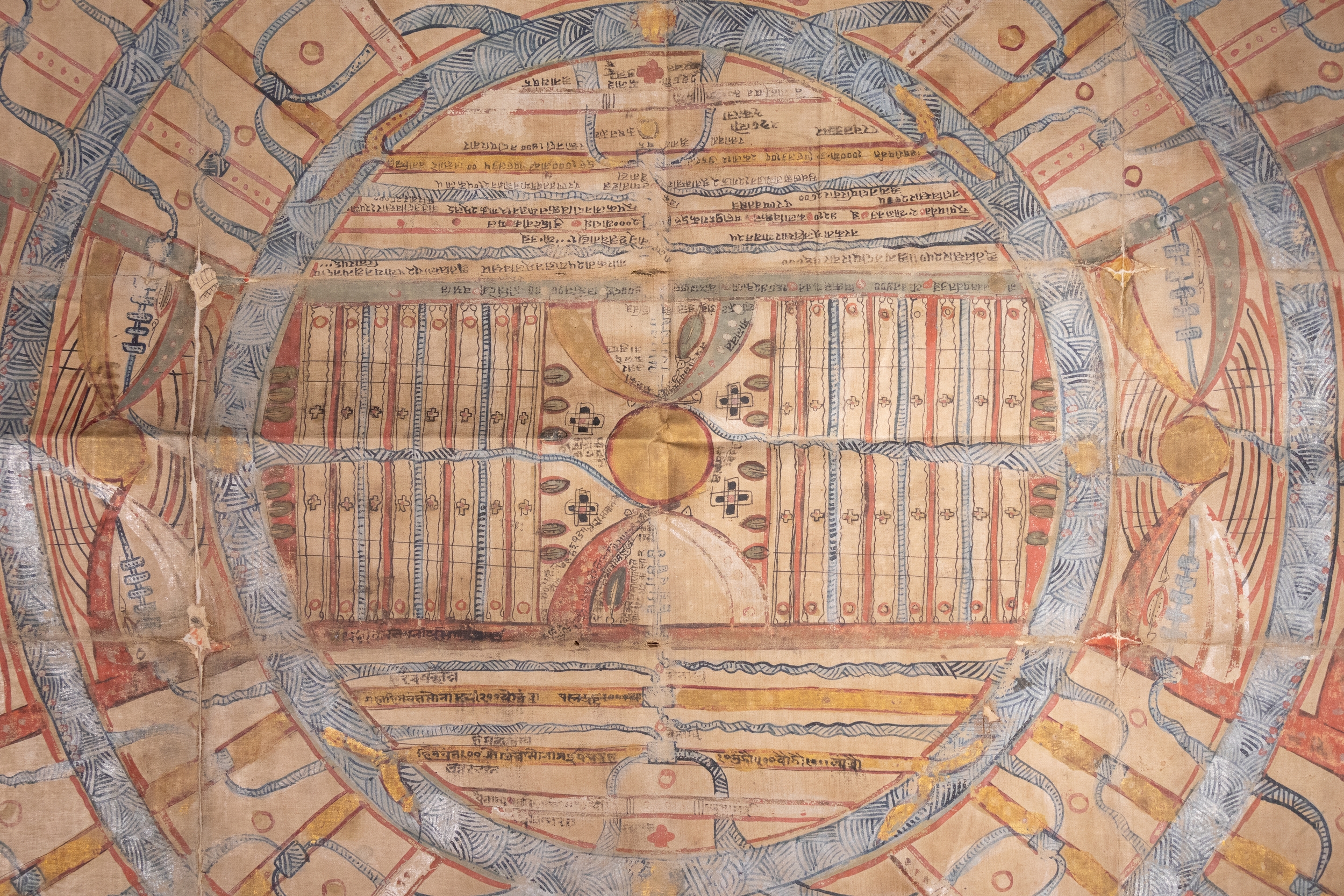
A Jain cosmological mandala, illustrating the plan of Adhaidvipa, or "two and a half continents" — the central realm where mortal beings reside according to Jain cosmology. Executed on cotton or parchment, the composition is structured with concentric rings and radial symmetry, and annotated in Devanagari script, likely in the Rajasthani dialect of Hindi.
At the center of the mandala lies Mount Meru, the sacred cosmic axis, surrounded by Jambudvipa, the continent of the rose-apple tree, followed by ring-shaped oceans and other concentric lands. Tusk-like promontories and mountain ranges separate the regions, while blue wave-like arcs depict cosmic oceans — Lavanasamudra (Ocean of Salt) being prominent among them.
The mandala is divided into three realms:
Upper world (heavenly celestials)
Middle world (mortals and earthly beings)
Lower world (hellish domains)
In the four corners are seated Jinas or Tīrthaṅkaras, meditative Jain saviors, facing cardinal directions, reinforcing the spiritual authority and structure of the universe.
The entire diagram is meticulously hand-painted with natural pigments—including lapis lazuli blue, cinnabar red, and ochre yellow—and arranged in a visual language intended for ritual use, cosmological instruction, and meditative contemplation.
Approximately 51 x 53cm
This rare Jain cosmological mandala was acquired by the current owner following a rigorous process of scholarly research and authentication conducted over several months. The work first emerged via a trusted contact within the London-based Asian antiquities community, having been sourced from the estate of a deceased private collector and handled by a reputable independent dealer.
Prior to acquisition, the mandala underwent expert evaluation, including consultation with a Himalayan art specialist and pigment testing. The analysis confirmed the use of traditional 18th-century materials and techniques consistent with ritual Jain paintings from Western India and the Sikkim region. Supporting documentation indicated the work had previously belonged to a private family collection in Sikkim with historical ties to Jain devotional practices.
The artwork was legally exported to the United Kingdom prior to the enactment of UNESCO’s 1970 Convention on cultural property, ensuring full compliance with international standards. The acquisition was finalised through a vetted dealer and is accompanied by digital copies of expert assessments, pigment test results, historical documentation, and a certificate of authenticity.
Share this lot: