
Lot 103: A LARGE INDIAN TANTRIC JAIN MANDALA PAINTING ON CLOTH, 19TH CENTURY.
0 views
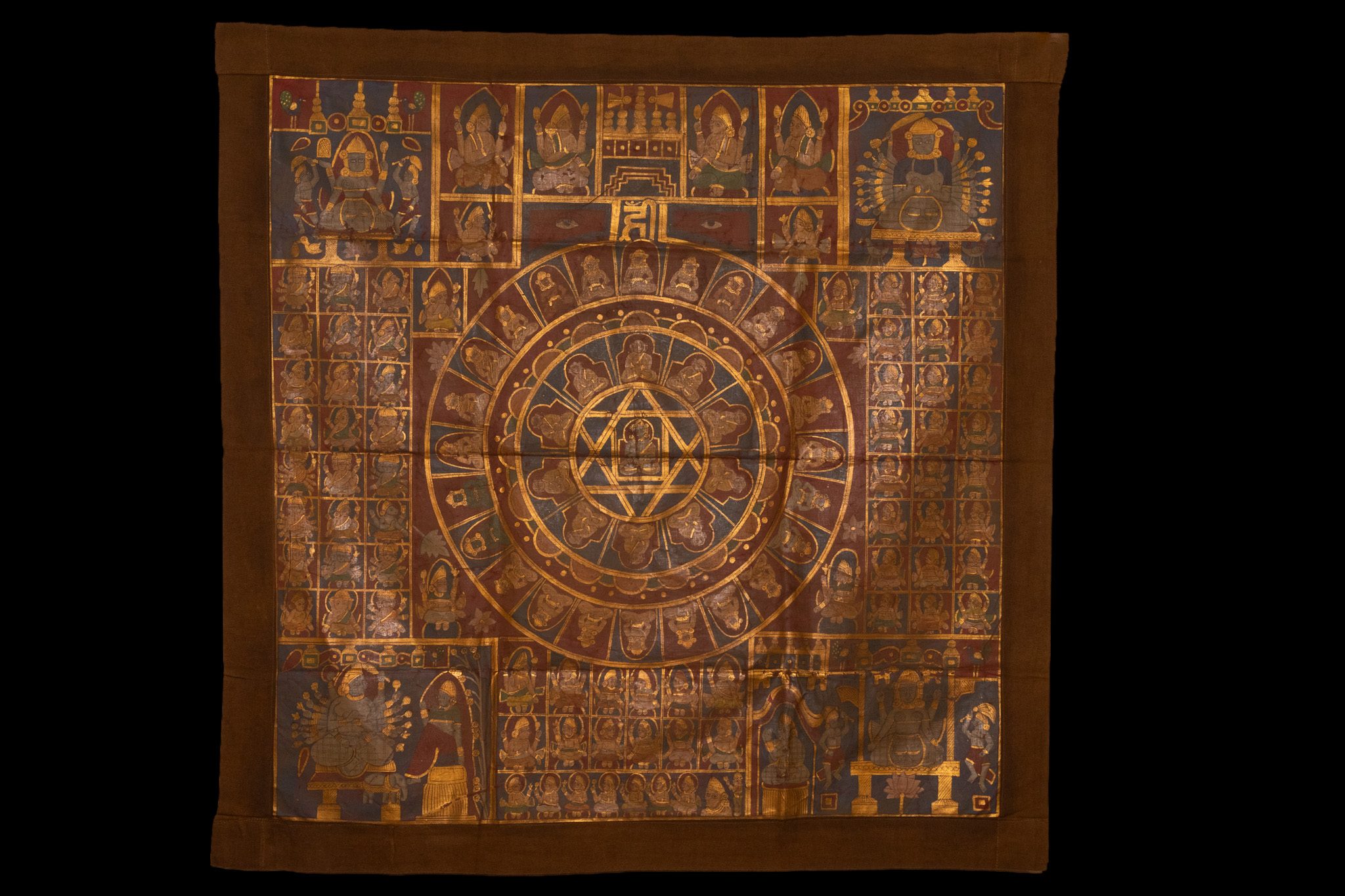
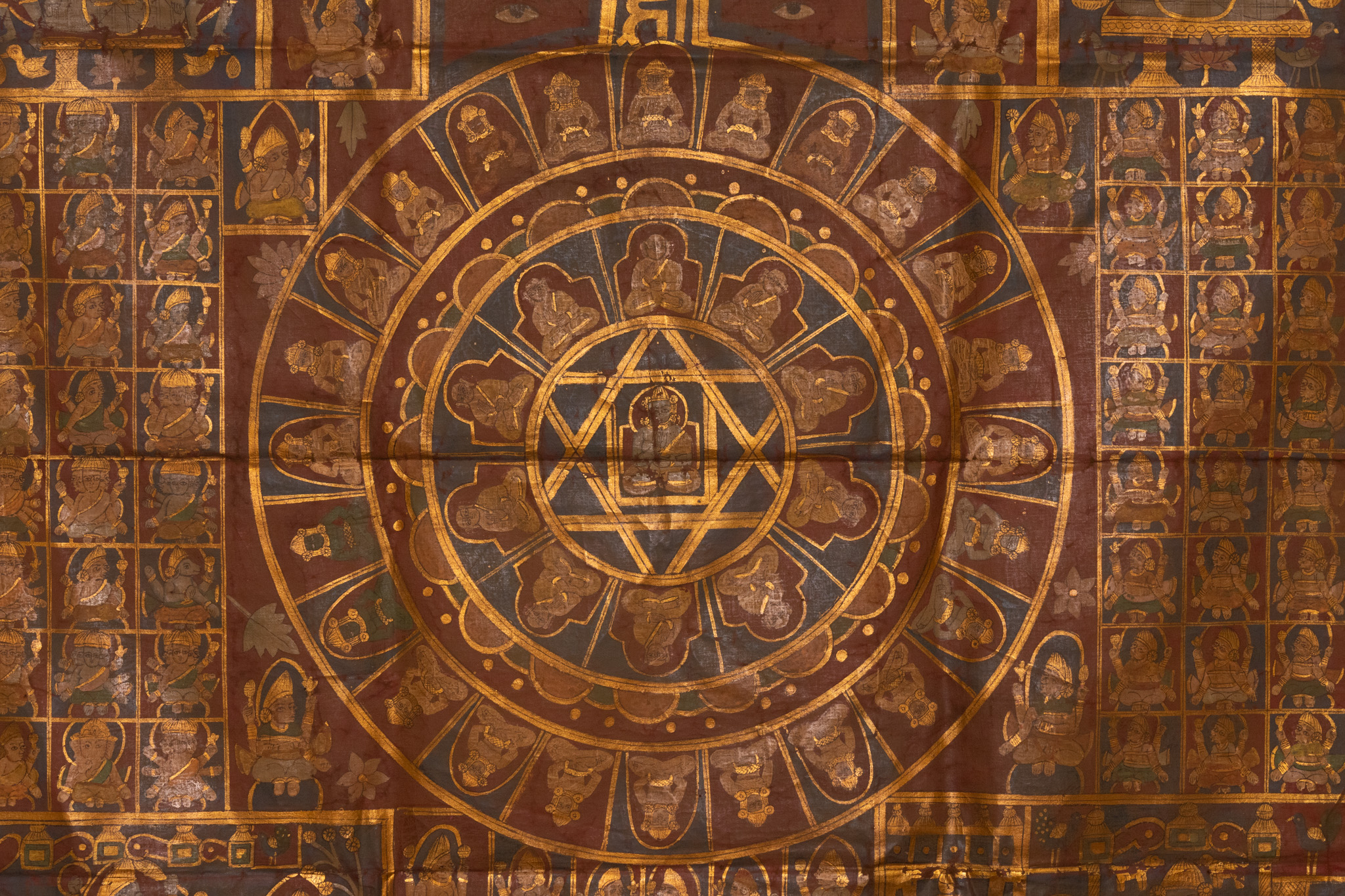
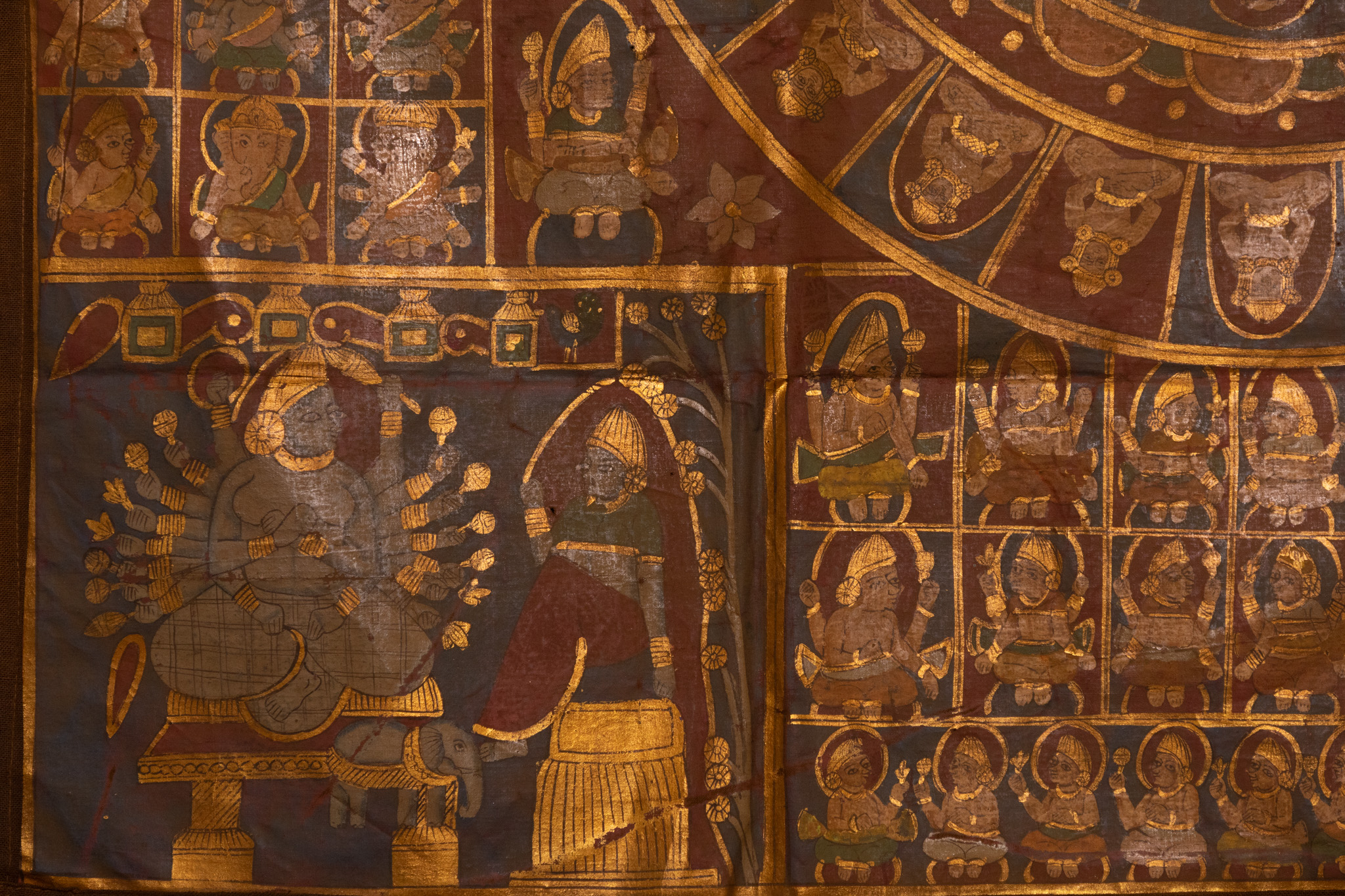
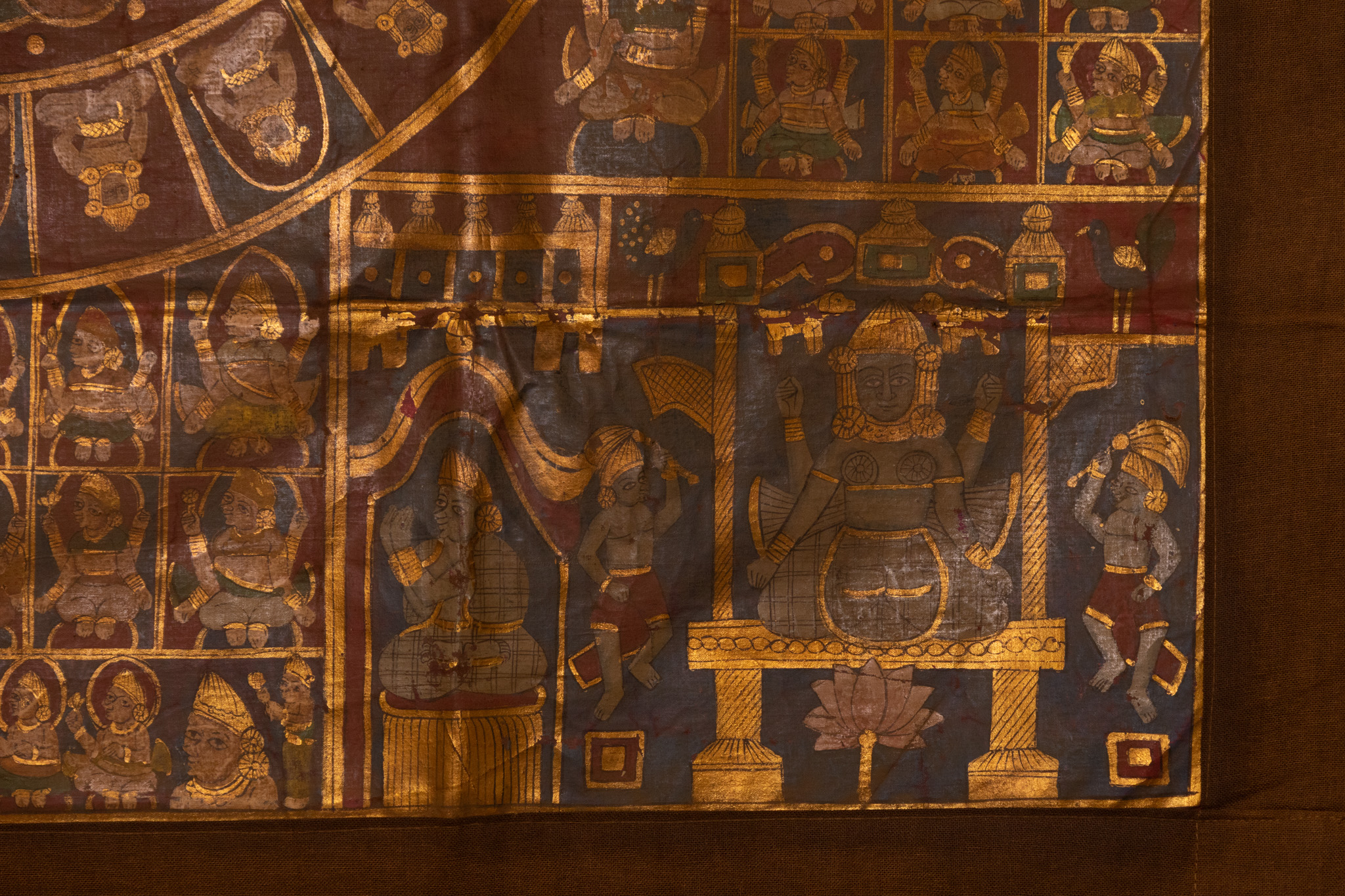
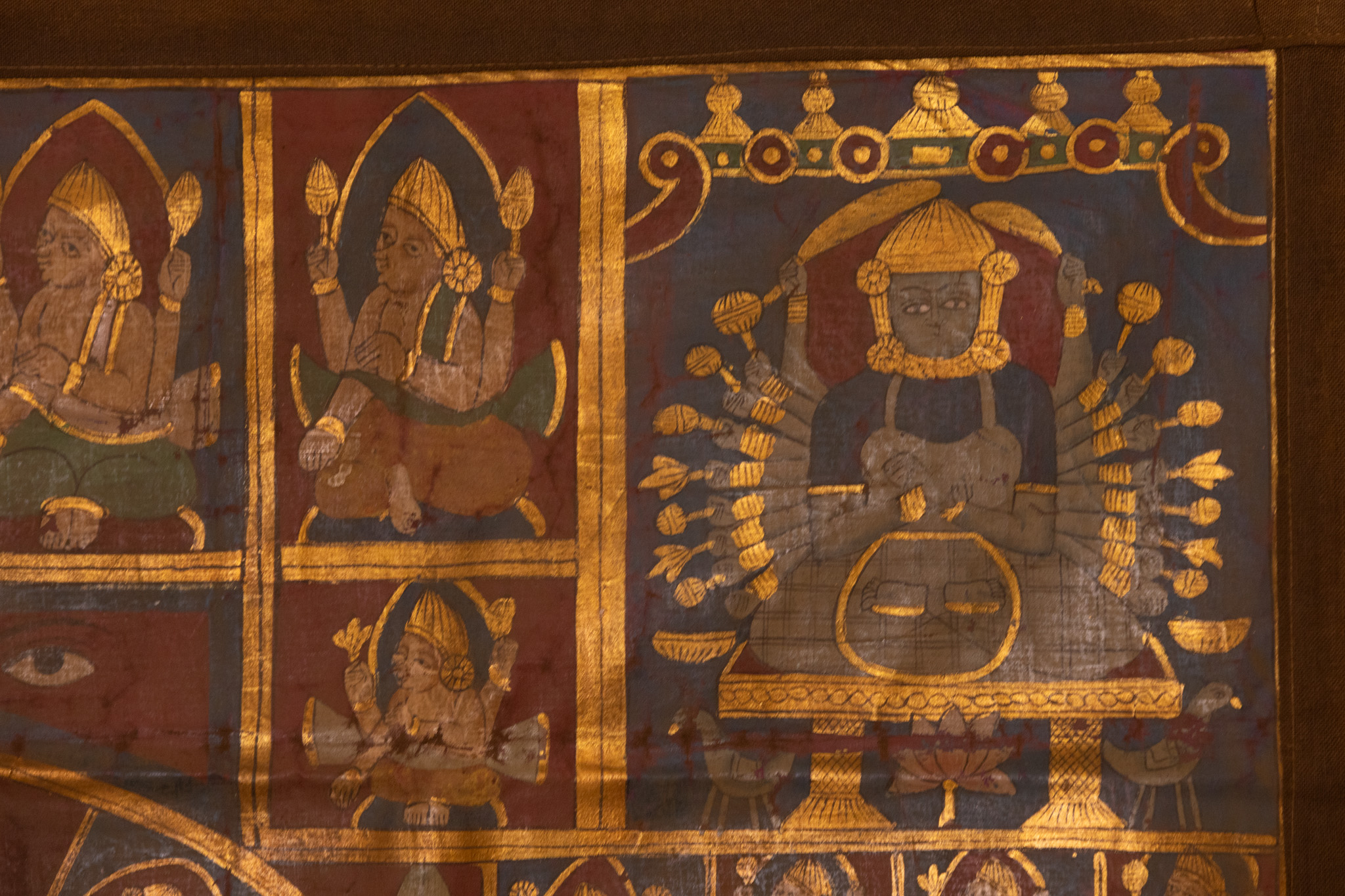
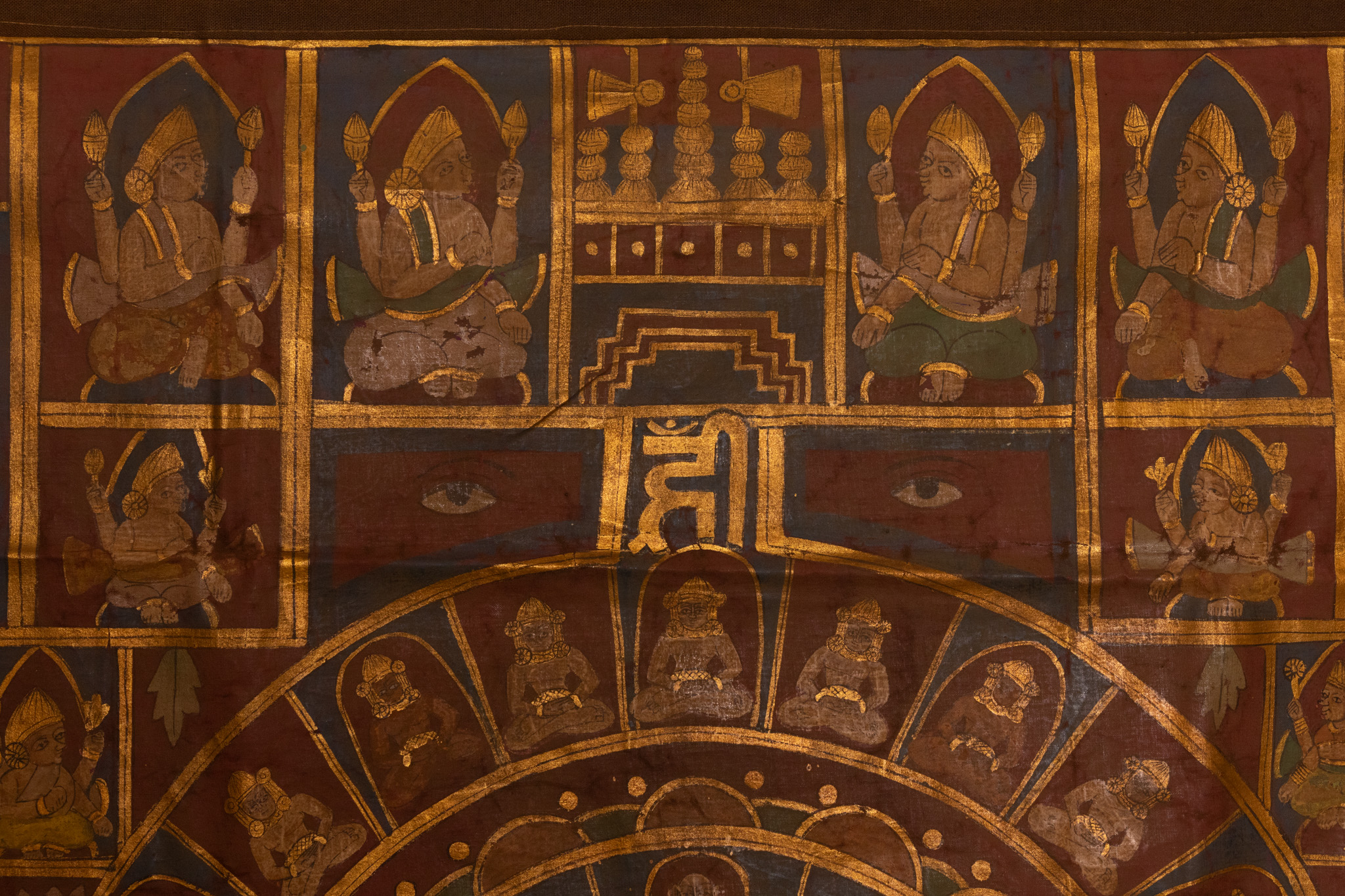
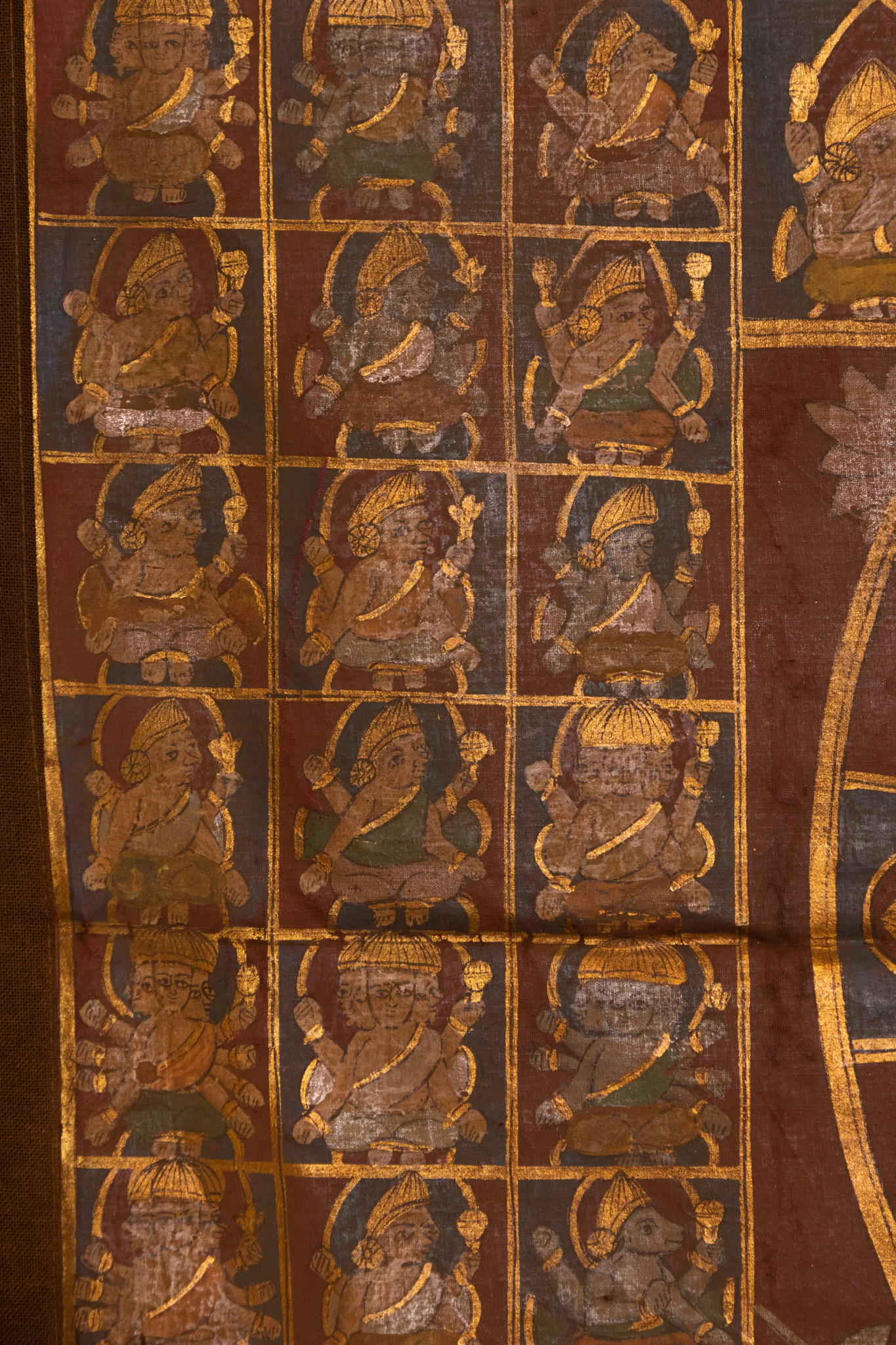
A large religious painting on cloth, executed in opaque pigments and gold, representing a Jain cosmic diagram or vastrapata. The composition is centred on a shatkona, an interlocking six-pointed star, containing a seated figure. This central motif is enclosed within concentric circular registers populated by seated deities. Surrounding the central mandala are rectangular grids containing numerous multi-armed figures, including representations of guardian deities and celestial beings. The upper section features architectural elements resembling temple shikharas, flanked by two pairs of seated four-armed figures. Between the temple structures and the mandala are two large eyes representing the divine gaze, flanking a central sacred syllable. Above the central circle, a prominent Sanskrit character is painted in gold, representing the bija mantra Hrim. The lower corners contain two larger figurative scenes: to the left, a multi-armed deity is enthroned above a small elephant; to the right, a four-armed figure is seated on a lotus throne beneath a canopy, flanked by attendants. The work is executed in a traditional Rajasthani or North Indian folk-tantric style, characterised by a palette of deep reds, ochres, and indigo blues, with extensive highlights in gold pigment.
Approximately 122 x 120cm
Condition report:
The textile substrate exhibits significant horizontal and vertical creasing consistent with long-term folding (photo 1). These creases have resulted in linear pigment loss and exposure of the underlying fabric, particularly visible across the horizontal centre and vertical axis (photo 2). There is general surface wear, minor staining, and areas of pigment thinning throughout the composition (photo 7). The gold pigment shows localised rubbing but remains largely intact and bright (photo 5). The extreme edges show evidence of old pinholes and minor fraying (photo 1). The dark brown outer border appears to be a later addition for reinforcement.
Share this lot: