
Lot 141: A Jain Devotional Pata with Tīrthaṅkaras and Celestial...
4 viewsSold for: £2,600
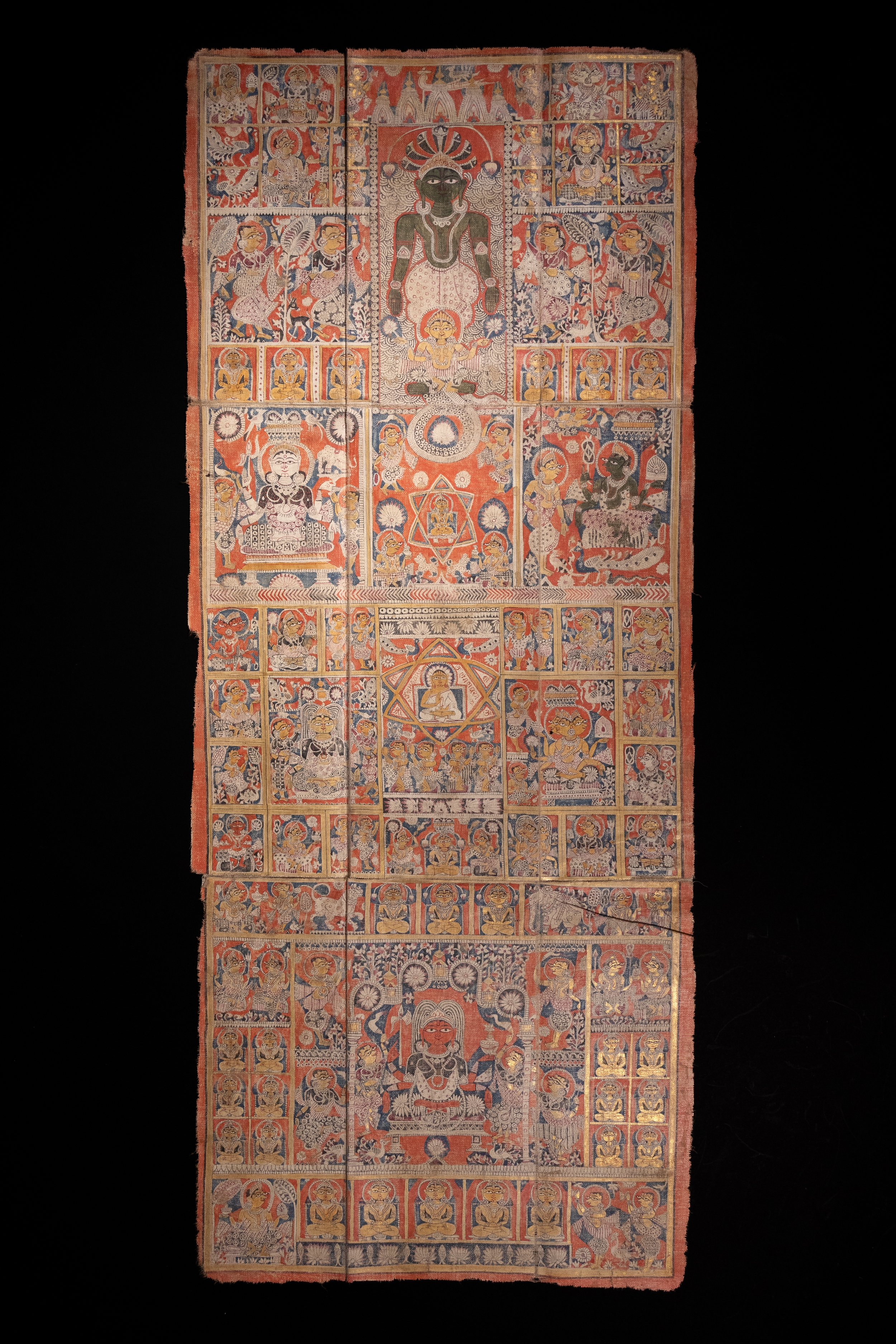
A Jain Devotional Pata with Tīrthaṅkaras and Celestial Scenes, Gujarat or Rajasthan, 15th–17th Century.
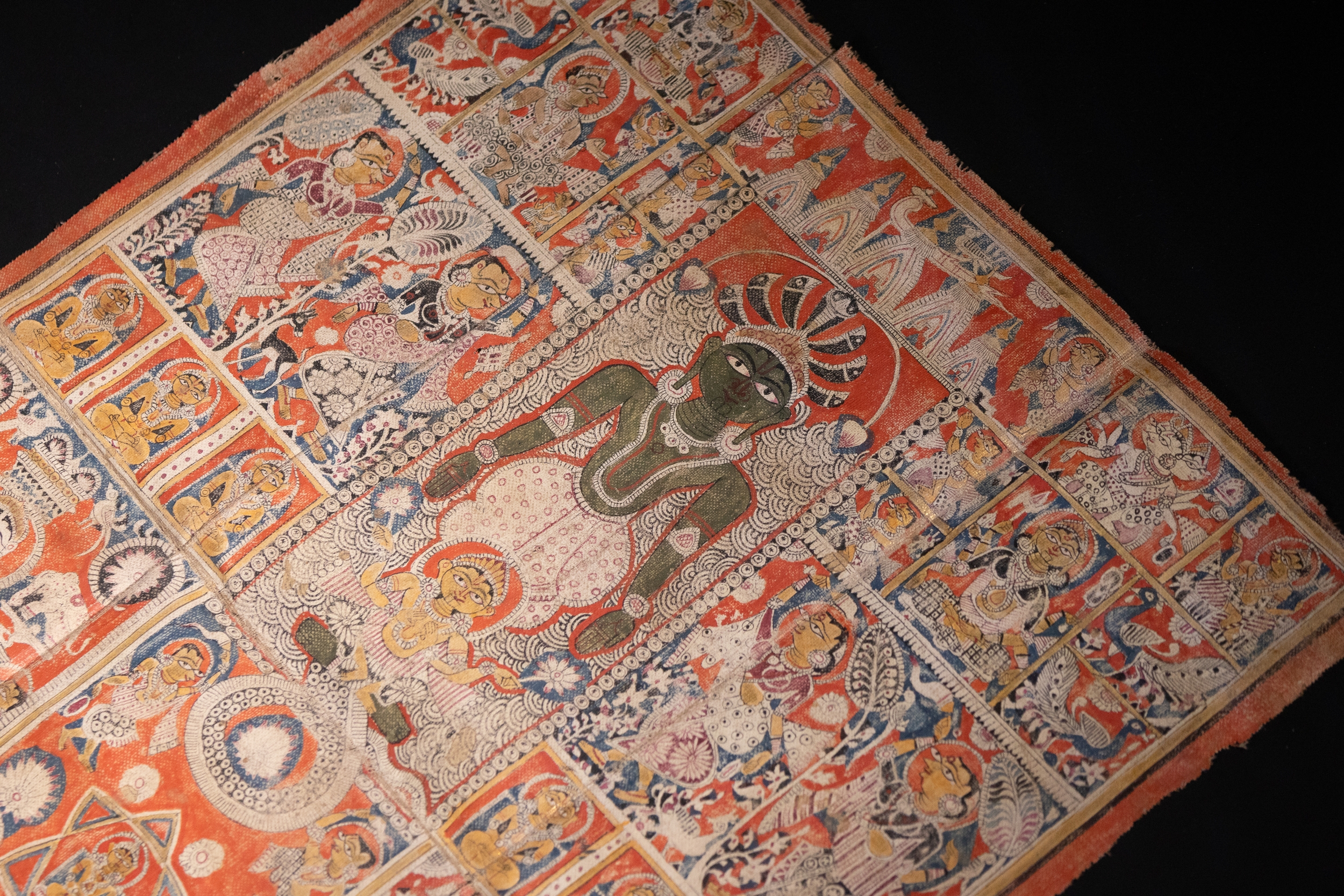
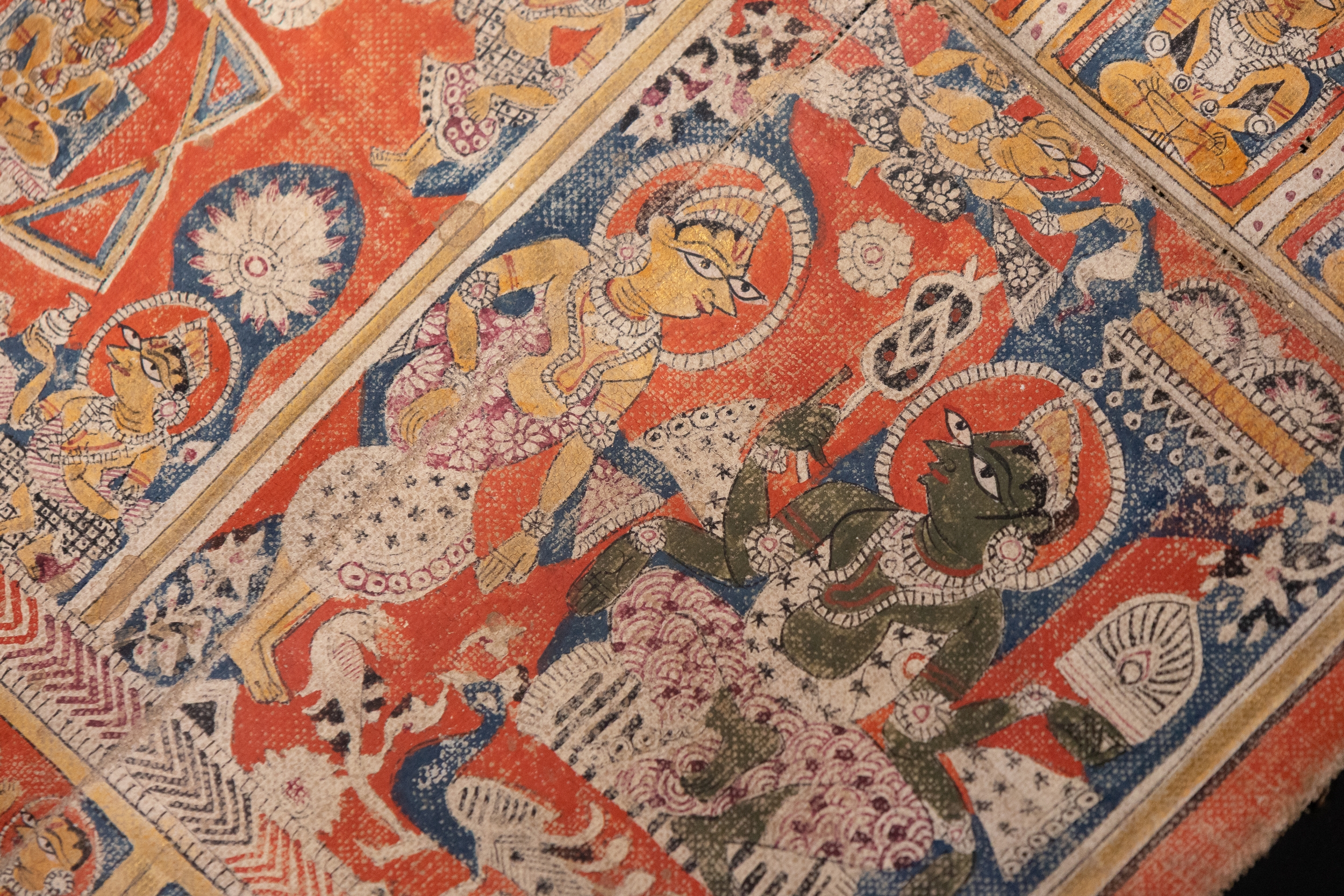
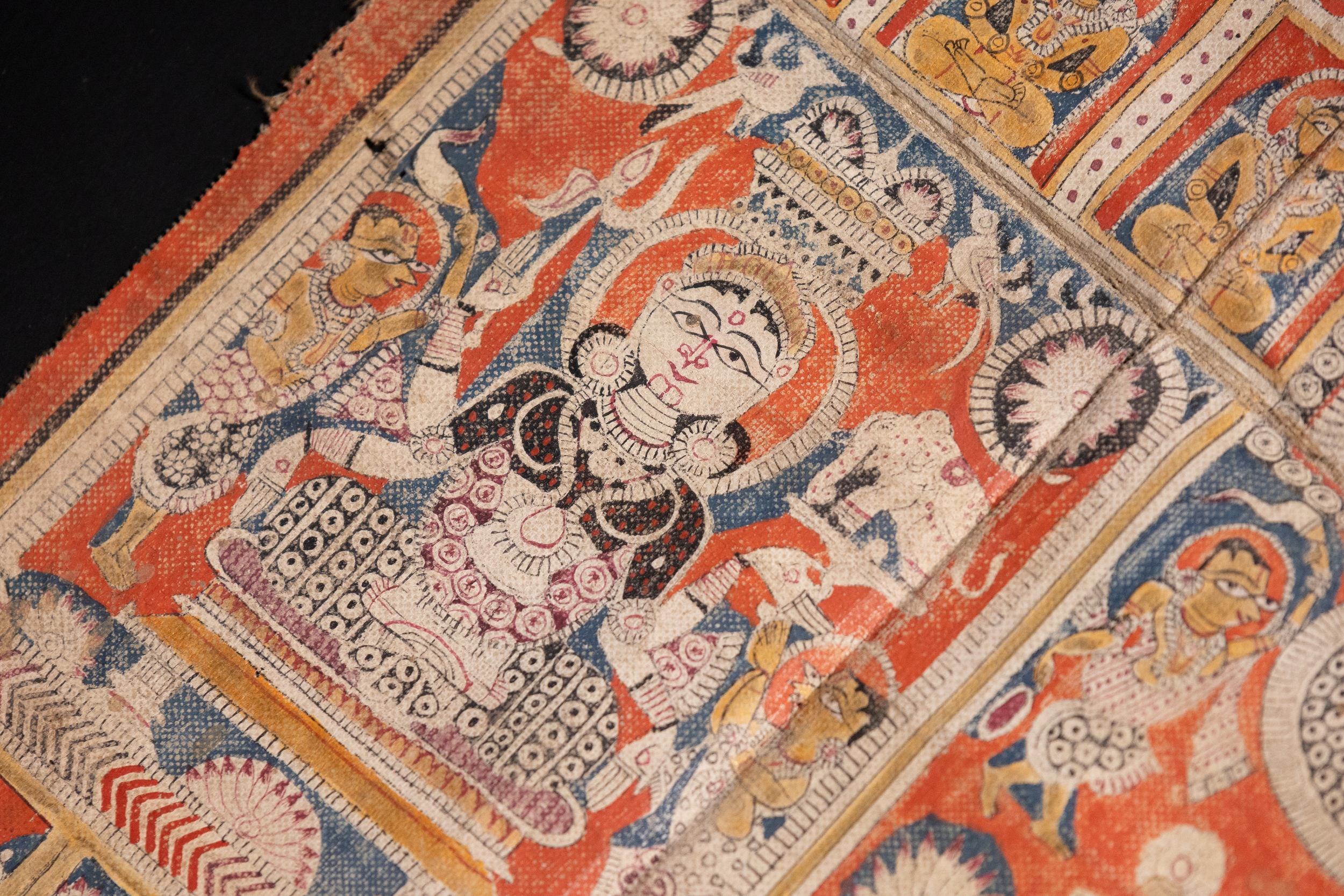
An exquisite and rare Jain devotional painted scroll (pata) from Western India, likely Gujarat or Rajasthan, dating to the 15th–17th century. Executed in a refined kalamkari or roghan style, this large-format cloth is structured in a multi-panel grid of divine and didactic scenes.
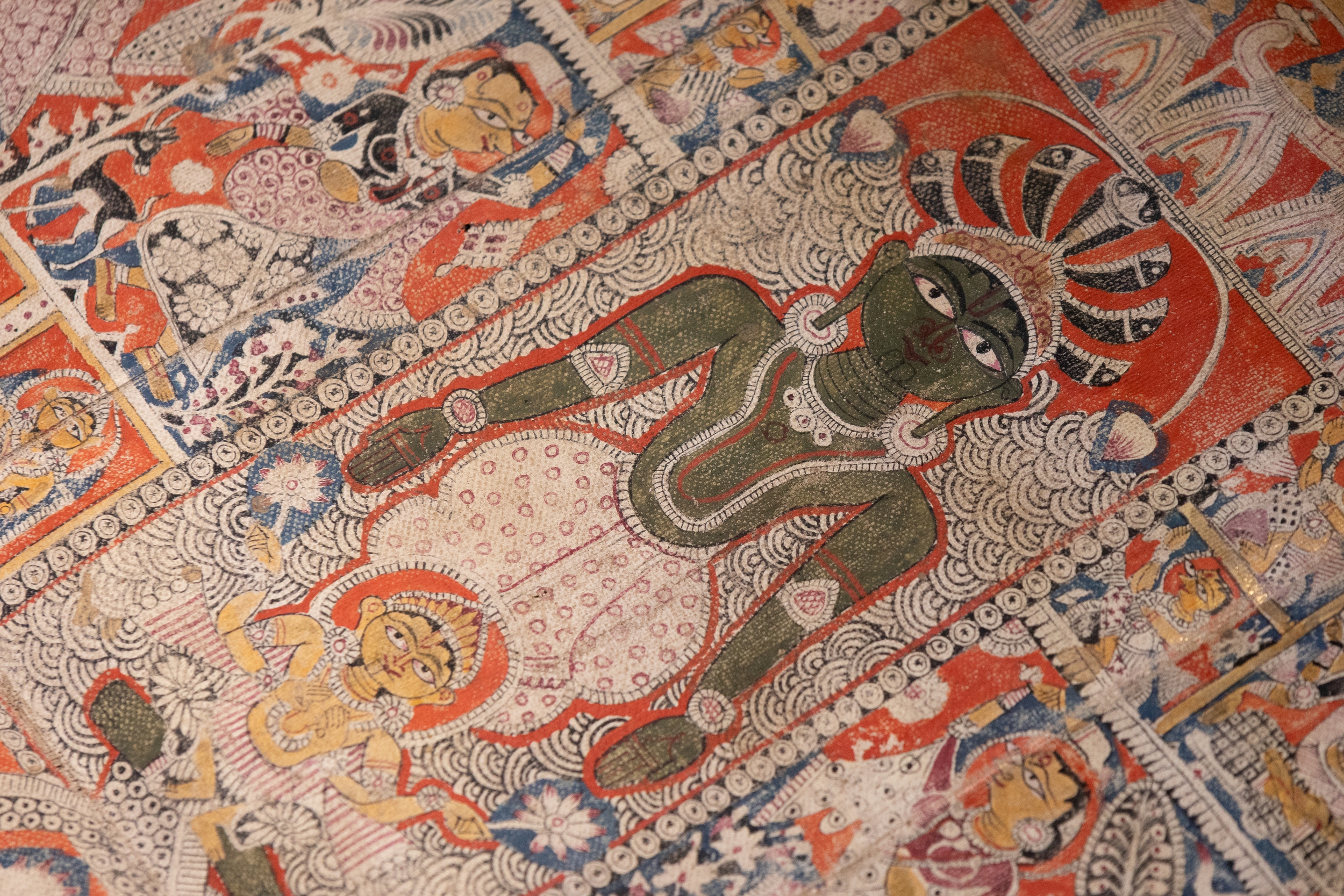
The central register features prominent Tīrthaṅkaras—Jain spiritual victors—depicted in dhyāna (meditative posture) or kāyotsarga (standing renunciation), framed by auras and sacred symbols such as the śrīvatsa on their chest. These enlightened figures are surrounded by Yakṣas and Yakṣīs, celestial guardians and divine attendants, rendered with expressive gestures and brilliant colours.
The cloth is organised in horizontal and vertical bands, suggesting a cosmic mandala or spiritual chart, guiding the viewer through narratives of the 24 Tīrthaṅkaras, often illustrating their Pañca Kālyaṇaka—the five auspicious events of birth, renunciation, enlightenment, teaching, and liberation.
Painted with natural pigments in earthy reds, saffron oranges, deep blues, and black outlines, the piece is accentuated with gold highlights. This kind of sacred textile would have been used in home shrines, monasteries, or during Jain festivals for darśana (auspicious viewing), allowing worshippers to engage in ritual devotion without pilgrimage.
Approximately 62 x 25cm
Provenance: This painted cloth panel shares strong stylistic and ritual parallels with a documented example of Mount Śatrunjaya housed in the Sanskriti Museum of Indian Textiles. Such devotional pichhavai or pata paintings originated in Gujarat or Rajasthan, typically between the 12th and 17th centuries, and were used by Śvetāmbara Jain communities as portable visual aids for pilgrimage and worship. These artworks allowed devotees to venerate idealised depictions of sacred sites or Tīrthaṅkaras when temple visits were not possible.
The gridded arrangement of figures, use of mineral pigments on cotton, and iconographic clarity correspond closely with late medieval Jain textile painting traditions from Gujarat. This piece is likely the product of a 15th–17th century Jain workshop, comparable in quality and purpose to the kalamkari pilgrimage cloths held by the Metropolitan Museum of Art and other major collections.
A similar pata was previously sold at Bonhams and acquired by French collector Patrick Vellerlsi, later re-entering the London market
Share this lot: