
Lot 139: A Jain Mandala with Padmavati, Gujarat, North-West India,...
3 viewsSold for: £3,200
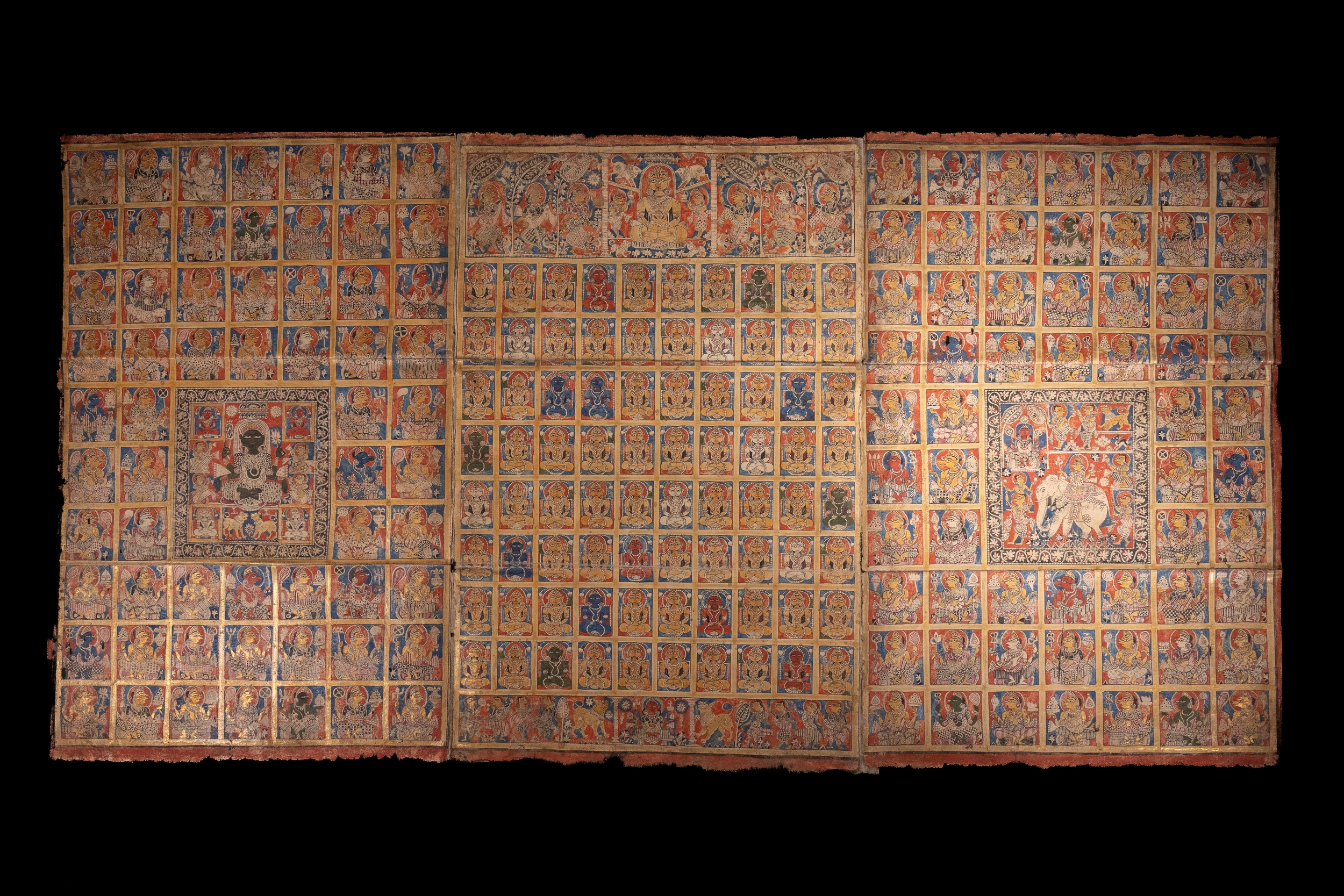
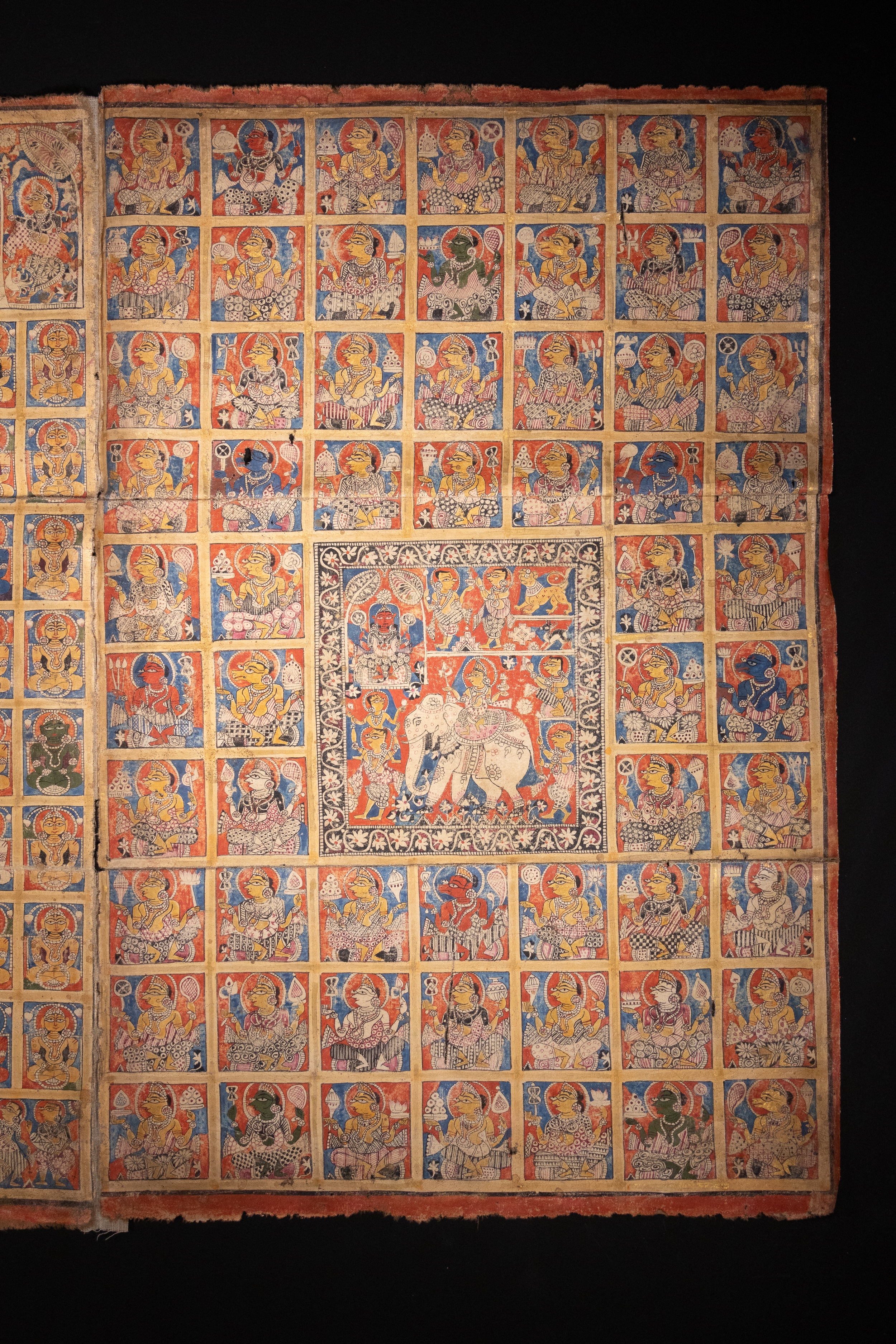
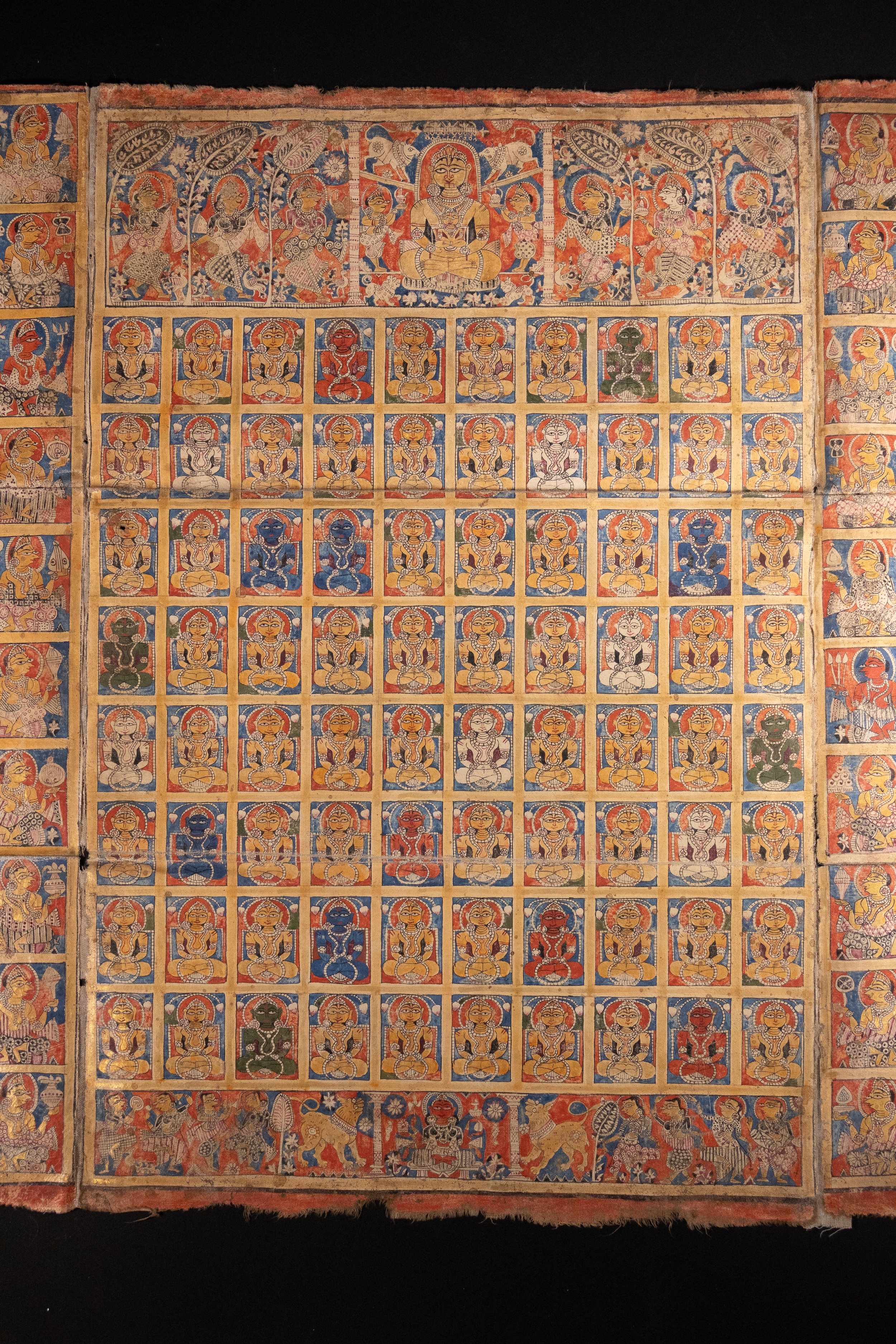
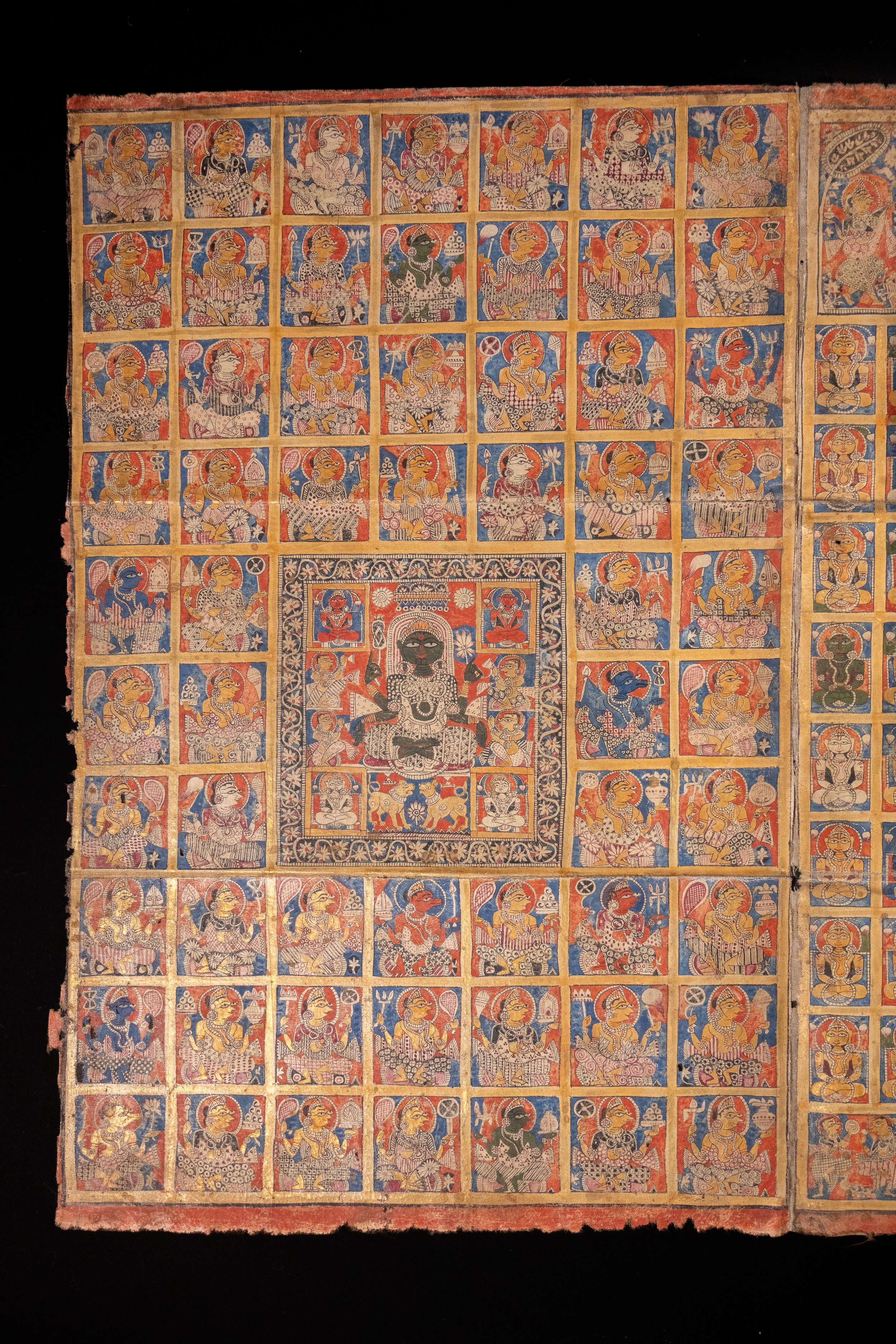
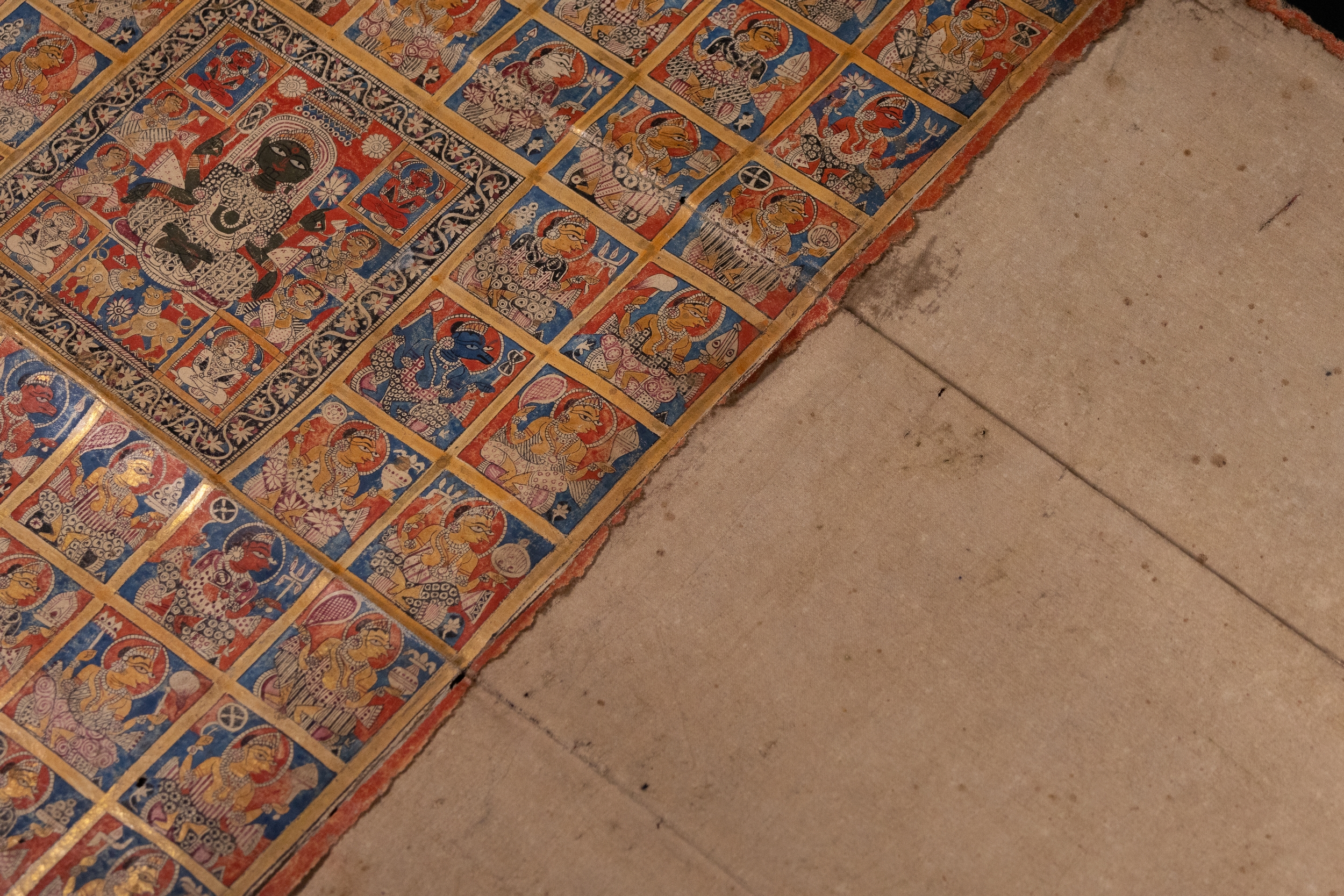
A Jain Mandala with Padmavati, Gujarat, North-West India, 17th Century.
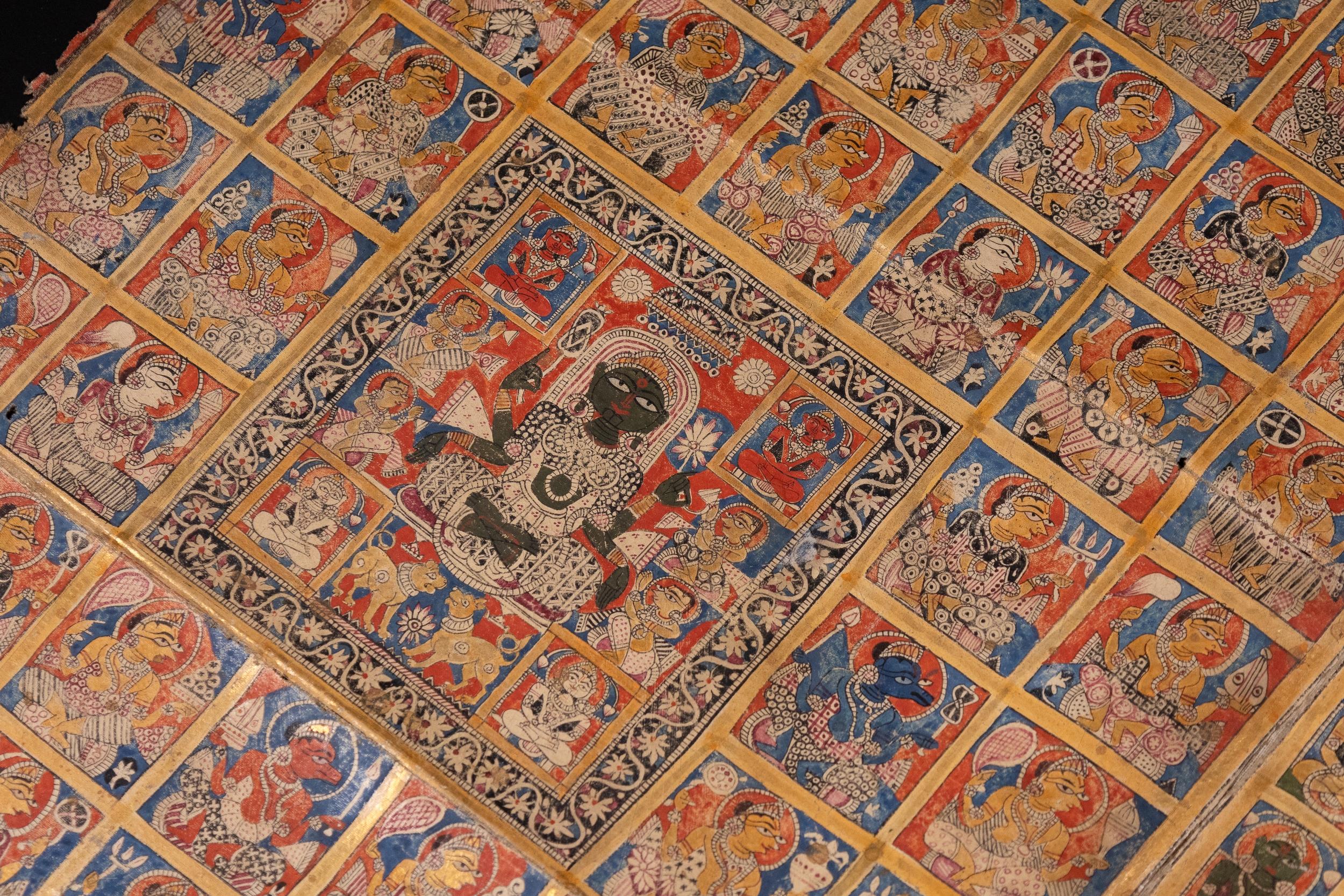
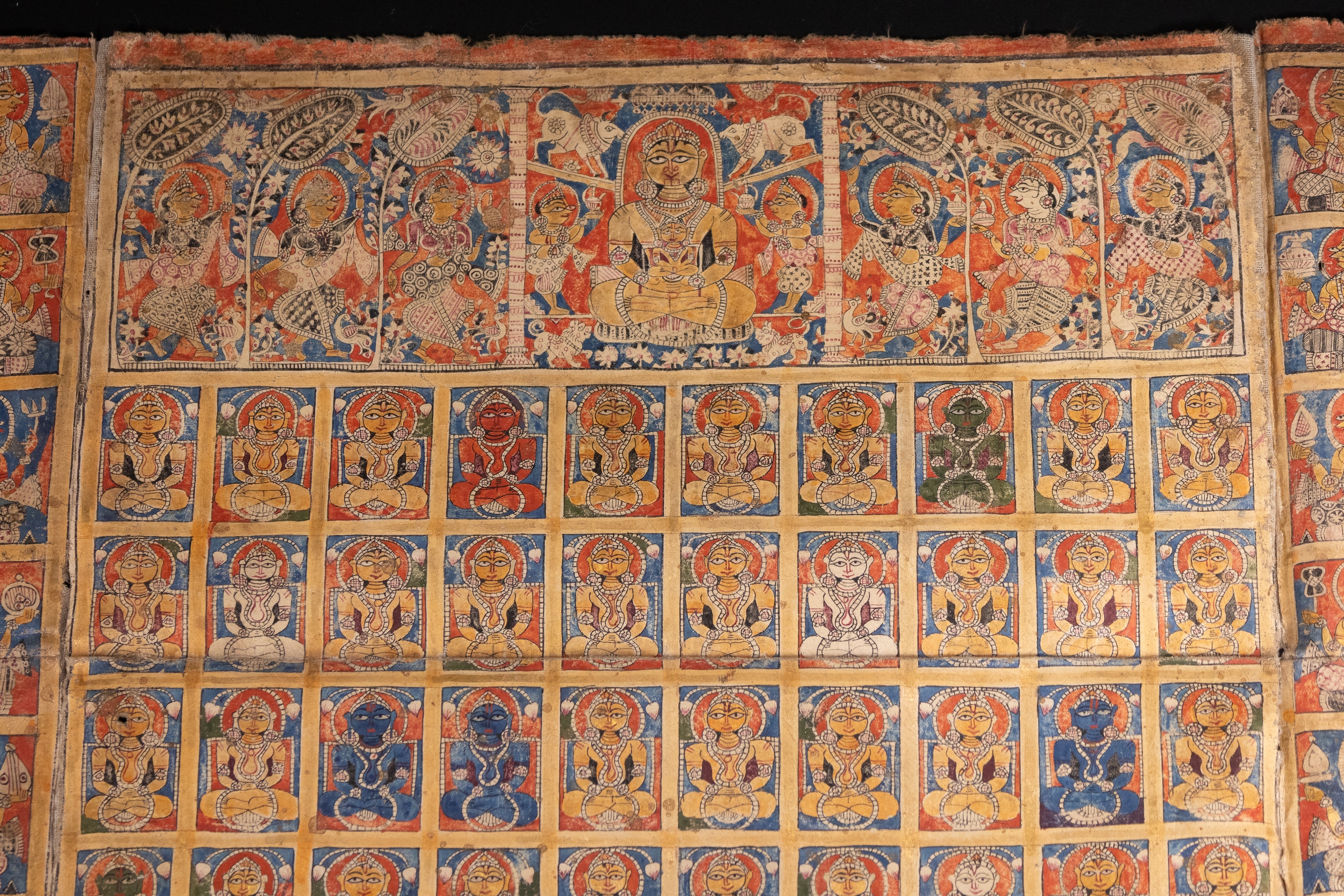
A monumental and intricate Jain mandala painting executed in opaque pigments and gold on cloth, originating from 17th-century Gujarat, North-West India. This sacred diagram centres around Goddess Padmavati, a revered protector deity in Jain tradition, depicted seated in the upper mandala’s central lotus throne.
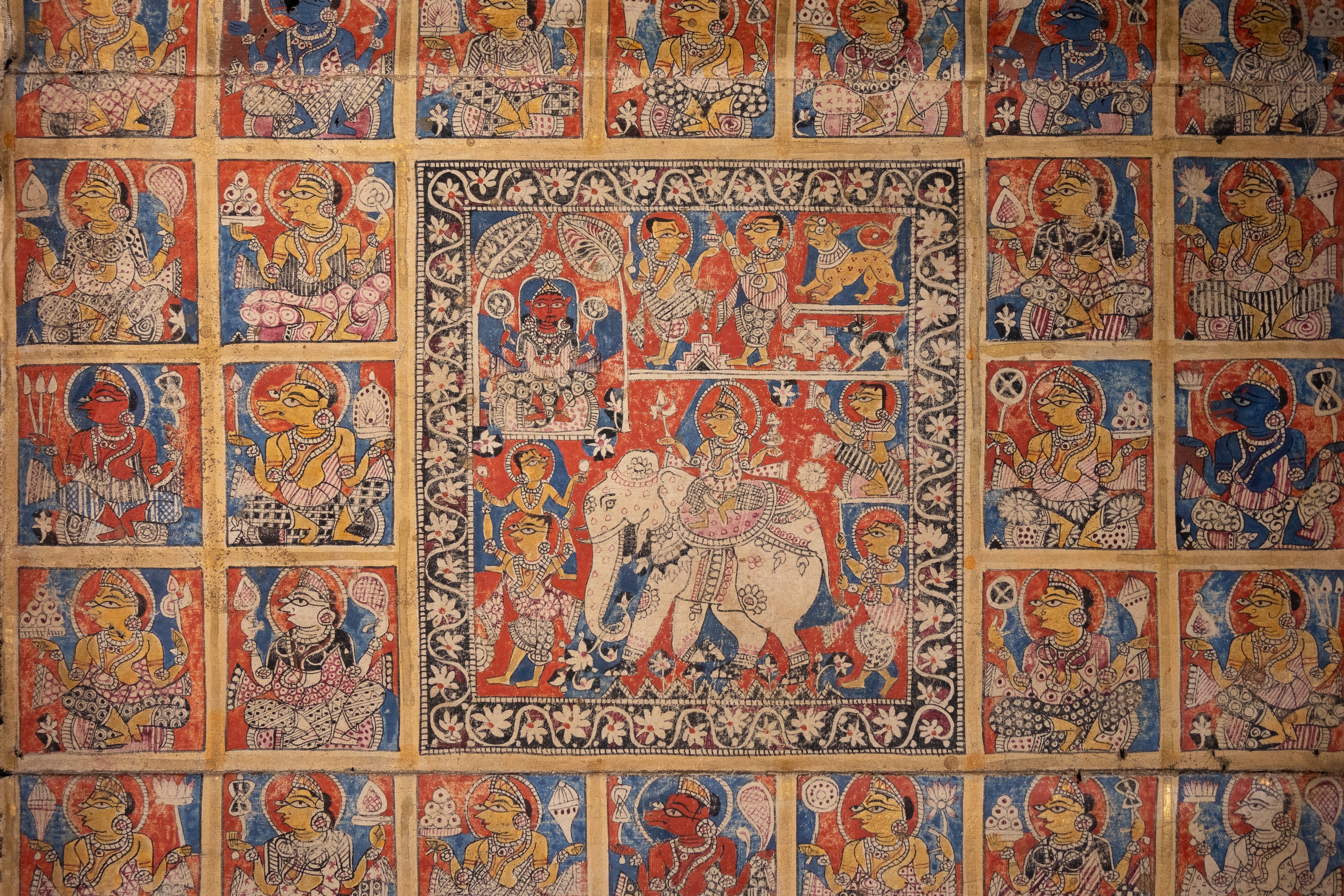
Surrounding Padmavati are numerous Tīrthaṅkaras, yakṣas, yakṣīs, celestial guardians, and dvarapalas (door-keepers), each enclosed within uniform square panels outlined in yellow—a visual representation of cosmic order and divine hierarchy. The symmetry and structured grid reflect deep cosmological principles of Jainism.
The lower mandala, whose function remains partially enigmatic, may relate to pranayama—the yogic discipline of breath control—and symbolic movement between planes of existence or meditative states. Its pairing with the upper celestial register hints at layered metaphysical meanings.
This tripartite composition is laid down on canvas, framed, and possibly used for ritual display or didactic instruction during Jain festivals or spiritual teachings.
Approximately 84 x 43cm
Provenance: Acquired in India during the early 20th century, likely between 1910 and 1930, this piece was brought to London by a British collector or colonial officer—part of a broader pattern of acquisition by colonial administrators, scholars, and enthusiasts of Eastern art during the British Raj. The artwork remained in private hands following its arrival in the UK and may have subsequently circulated through gallery or institutional holdings.
Share this lot: